All Carnevale Recipes

Food for Dragon’s Mist’s Carnevale AS L

By Mistress Eulalia Piebakere

The Vision

A melding of cuisines from Venice and Constantinople from roughly the time of the Fourth Crusade (the very beginning of the 13th century). Both of these places had independent well-developed food cultures, and each also tended to have an early sort of “fusion” cuisine as each city was quite cosmopolitan and a hub for commerce and trade. Also, in my vision we ignore the fact that crusades were nasty, awful things and that the sacking of Constantinople was objectively terrible.

Continue reading “All Carnevale Recipes”

A Basic Medieval Spice Kit

(This is reblogged from my old blog)

I could write absolute digital reams on the subject of spices in medieval cuisine. No, medieval people did not use spices to mask the taste of rotten meat (don’t get me started), but spices are an integral part of medieval cooking. While individual dishes have their own unique spice profiles, there are two indispensable spice mixes that show up again and again in medieval recipe collections from various times and places: powder douce and powder fort. My basic spice kit to take to events contains these two mixes plus salt and saffron. These four items are enough to get me through most dishes I want to prepare. Here’s some more information about each of the blends:

Powder fort: Fort in this case meaning strong. Mentioned in Italian, French, and English recipes for sure, and likely in recipe collections from other places but I am less familiar with them. So far in my reading of English recipes from the 13th and 14th centuries, I have yet to come across an actual recipe for powder fort itself. There is some evidence (mostly from the Menagier de Paris) that these mixes might have been purchased ready-made rather than prepared by a household or home cook, which offers one explanation for the lack of recipes. Additionally, it’s extremely unlikely that everything called “powder fort” was the same. Think of this as a name for a category of related spice mixes rather than a name for one specific mixture. My practical advice is that you experiment with different mixtures of strong / “spicy” spices to find something you like. Possible spices include black pepper, cubebs (tailed pepper), grains of paradise (also a hot, peppery spice), long pepper (the hottest spice known in medieval Europe), cinnamon (either true cinnamon or cassia), clove, mace, ginger, nutmeg, and galingale. My favorite mix combines approximately

  • 1 part each:
    • Black pepper
    • Cubebs
  • 1/2 part cinnamon
  • 1/4 part mace
  • 1/8 part clove

Grind to a fine powder and mix well.

I like my powder fort to mostly taste of pepper, with the other spices there for balance and complexity. I tend to leave out long pepper and grains of paradise because I think each has such a subtle flavor that they deserve the spotlight. I also generally stay away from the “weaker” spices — I just don’t think ginger, nutmeg, and galingale can hold their own against the other ingredients.

Powder Douce:Douce meaning sweet, these spices are somewhat milder than those in powder fort and more appropriate for sweet dishes. Additionally, powder douce can include sugar. All of the explanatory notes above apply equally to powder douce, except those about the desired flavor and ingredients. Powder douce is often sprinkled on egg and pasta dishes.

Possible ingredients include sugar, cinnamon (here I would stick to true cinnamon if possible), ginger, nutmeg, galingale, and possible small amounts of mace or clove.
My personal combination, again approximate quantities:

  • 1 part sugar
  • 1/2 part ginger
  • 1/2 part cinnamon
  • 1/4 part nutmeg

Grind to a fine powder.

I generally leave out mace and clove as the strong flavors can quickly overpower the other spices. Remember, if you want strong spices, choose powder fort.

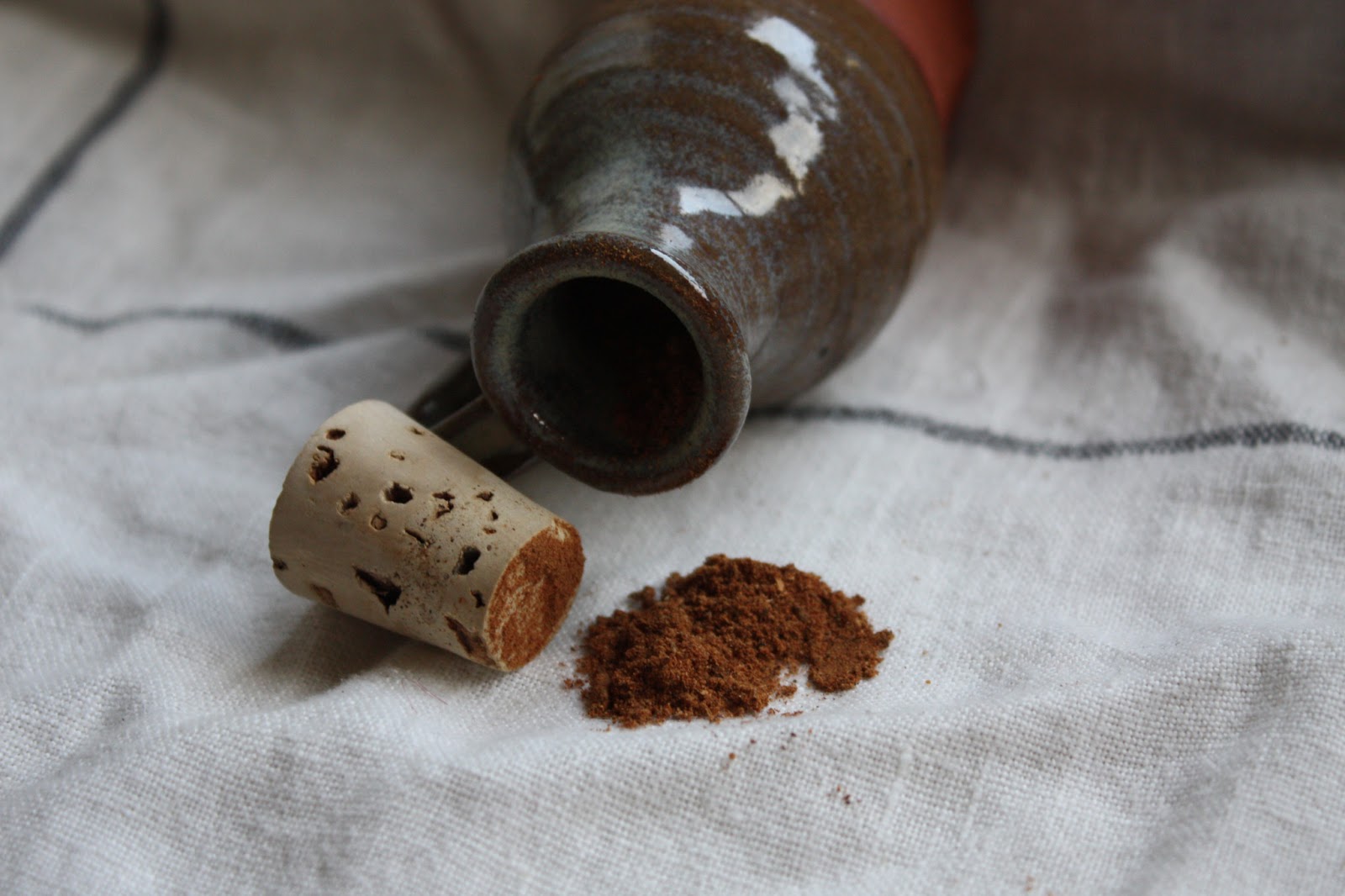
I store my powder fort and powder douce in the earthenware jars pictured above, which were made by Mistress Morgaina. As mentioned above, I round this out with saffron and good sea salt. For longer events I often add more to my stash, but these are enough to get me through most camp cooking projects.

My Life Philosophy

Last year at Twelfth Night, I had just declared that I’d be entering KASC and was thinking about how I had to learn to be more serious. Then I spent the weekend charging around the hotel hanging toast in people’s showers and pouring cider through a glass funnel into the mouths of excited bystanders. 

And I figured myself out: I am a golden retriever, all full of love and enthusiasm and maybe a little slobber. I can’t help but be excited and bouncy. I love to meet people and learn about them and introduce them to other people and help them when I can. I am goofy, and I like warm hugs.

And these things are okay. In fact, they are better than okay, they’re great! Instead of trying to repress this aspect of my personality and make myself more serious, I began then to accept and embrace it. As I see again and again, I’ve had so many incredible experiences as a result of being this open and enthusiastic.

I actually think my life might have changed with that understanding. Since then I’ve felt so much more loving and kind toward myself; I think I finally crossed the threshold of radical self-acceptance. In the past year, I have come to finally see that while I am allowed to improve and change, I am also allowed to be enough exactly as I am in this moment. That’s a really nice feeling.

The lesson in the heart of this that I hope I can hold on to always is that love makes us glow. When you’re passionate about something, you light up a room (yes YOU!) and are unstoppable (yes YOU!) Honestly, this is why I love the SCA: I get to see people doing things they love, and I get to do things I love, and there’s just so much squee-ing.

I charge everyone to make more of those moments. Let’s let our lights shine when we talk about our research and projects. If you are working on a thing, come sit next to me and talk to me about it.

Also, let’s hug. Like, all the time. (Or as much as you can stand.)

Wassailing

Waes hael! Drinc hæl!

Wassailing is a wonderful English custom that sadly seems to have been lost in the US, and I personally think it’s time to revive it. Last year I did some wassailing at 12th night and this year I’m planning to do it again. In fact, you might be reading this because you’re trying to figure out why there’s toast in your shower. A special hello to you!

There are two distinct types of wassailing: in the first, a band of merry revelers go door to door singing and demanding (or providing) booze. Now we’d call this caroling. You can learn more about this sort of wassailing here and here.

There’s another, perhaps earlier, wassailing custom: wassailing the orchard. This is essentially a fertility rite: revelers bring alcohol (either ale or cider) to the apple trees, sing them songs, and hang toast (soaked in cider) in their branches to ensure a good apple harvest for the coming year. You can learn more about wassailing the orchard here, here, and here.

For my new SCA Twelfth Night tradition, which I’m posting about to encourage all of you to do it too, I combined these two customs. I and a band of “wassailants” go around to people’s rooms, knock on their door, yell WASSAIL!, then hang a piece of toast in their shower and offer them a drink of cider. We chose the shower for the toast because it seems easiest to clean up. I’m hoping to add a musical component to this, too, but I don’t personally know any of the songs (except the Christmas carol that’s still popular) for wassailing. It’s a fun little mini history lesson, and a reminder that if you think authenticity isn’t fun, you’re reading the wrong books.

More glass painting, and a new Pinterest board

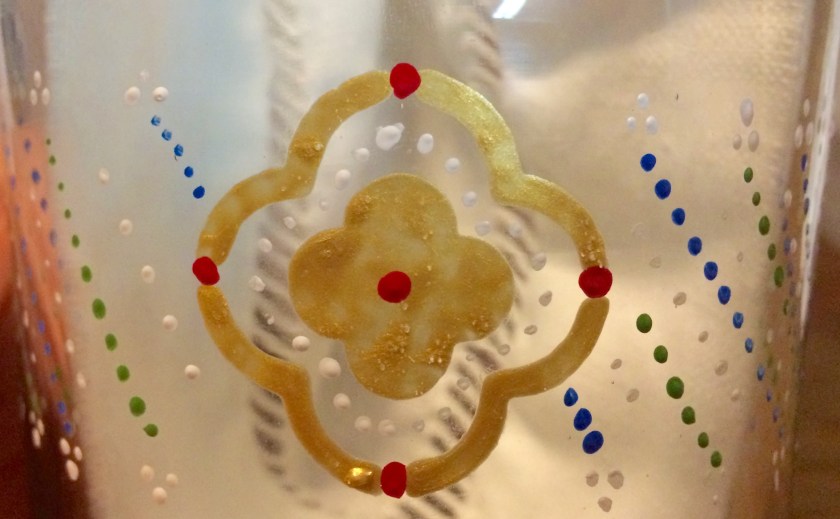
I’ve continued my glass painting experiments:

IMG_3166

I have to say, I’m quite pleased with this. The glass itself came from Crate & Barrel, who have a pretty good selection of glassware that looks passably historical:

Since the last time I posted about glass painting, I’ve switched paint brands. I got a set of Martha Stewart multi-surface craft paints. They are much cheaper than Pebeo and I personally like the colors better (especially this gold!). I am sure they are not as high quality as Pebeo paints, and time will tell how well they hold up. But they work very similarly in that you paint them on the glass, let them dry fully, and cure them in the oven.

I used a stencil for the quatrefoils, and I think I’m getting better with my stencil technique too:

IMG_3164

Notice that my paint is bubbly. I don’t know if that’s the paint or user error.

Otherwise, the big breakthrough since the last time I posted about glass painting is switching to using more dots than lines. With my skill level and the gloppy consistency of the paint, this has been a much better way to yield something that looks decent.

IMG_3165.jpg

This particular design is inspired by some of the patterns on this Italian hanging lamp.

I have started a board on Pinterest for examples of period painted glass — check it out. Unfortunately, most of the really beautiful figural paintings are utterly beyond me (at least for now!), but there are a few examples on there with simpler geometric designs that I’m inspired to try out.

This glass is going to be a volunteer thank you at An Tir’s Twelfth Night. Volunteer and you could be the one to take it home 🙂

A Simple Stenciled Stool

IMG_3143 Every Laurel needs a place to rest occasionally 🙂
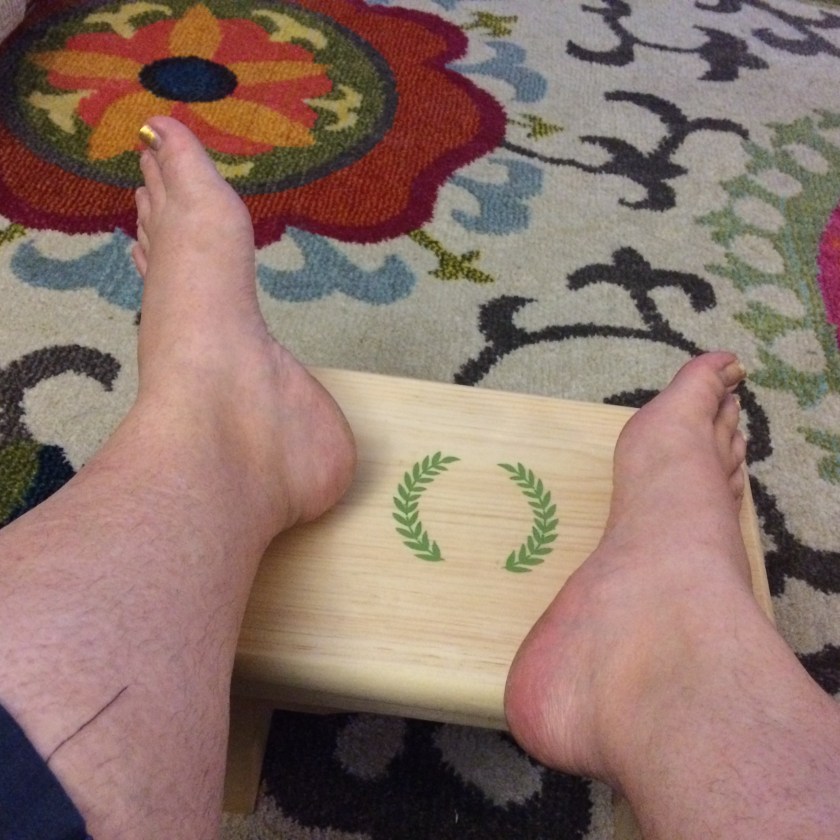
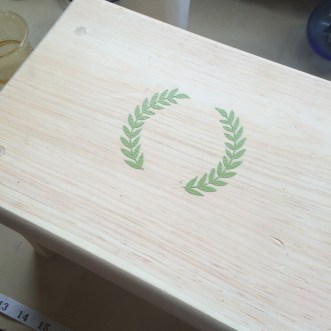
My lady and I are not particularly tall, and often found that our feet didn’t reach the ground in typical period-style or even modern folding wood chairs, so on a tip from Svava we started packing little wooden foot stools with our camp gear. They are really, really useful — I sit on mine when I cook in my small and low to the ground fire pit, as that little boost up is just enough to make it easy to get up and down. When it became obvious recently that I needed to replace mine, I decided I wanted to do something a little different and added a painted laurel wreath to it. I posted this picture on Facebook and a fair number of people seemed enthusiastic, so here’s a quick how-to if you’d like to repeat this project.

Materials:

You will note that the paints and painting supplies are pretty expensive for a one-off project. You could offset that cost by doing this as a group project or by stenciling laurel wreaths on literally everything you own 🙂

Optional: You can sand the stool before you start, but I skipped that step since this isn’t really that kind of project. Do make sure it’s roughly clean.

Dab stencil glue on the back of the stencil, let dry, and stick in place on stool. Use a stencil brush or dauber to paint the design, then peel off the stencil. Let dry several hours. Using a brush or a rag, coat the entire stool with the cream wax, wiping off the excess. Let dry several more hours (or overnight — you can do all these steps across multiple days), then apply another coat of cream wax. The manufacturer says the cream wax is for indoor use only, so I doubt this will last a long time.

To be even more historical, paint the entire stool with one color before stenciling on the wreath. Medieval people painted over wood, because wood was cheap.

Now this Laurel can rest on a laurel:

IMG_3147

I’m quite happy with how this turned out and will probably do some more stenciling projects. You could also do something similar with block printing to be more historical.

Obviously, you can also do this with designs other than laurel wreaths. Here are some designs that look passably historical:

I’ve found quite a few specialty stencil sellers on Etsy, too, so you can probably find some fairly specialized ones.

Happy crafting!


Quince Paste from my Garden

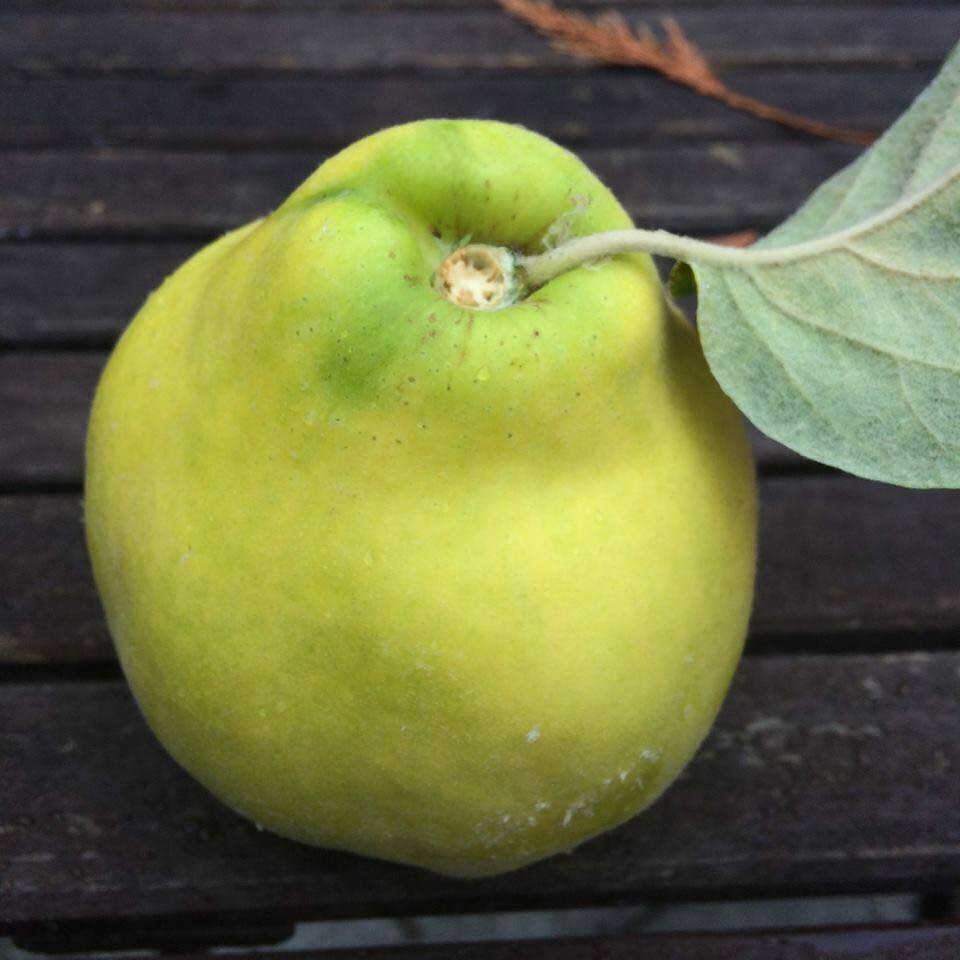
My quince tree blessed me this year with much more fruit than I was expecting. Because we had such a warm, dry summer, they ripened earlier than they did last year. That meant I didn’t have to fight off the stupid squirrels, as there were still plenty of things for them to eat so they stayed away from the harder to eat quinces. I ended up with 8 large, beautiful, perfect fruits. I picked them and kept them in my house for several days just to make everything smell delicious.

Quince

When I was ready to process the quinces, I cored them and chopped them roughly, then weighed the fruit. The final tally was just over 4 pounds of usable fruit — yay! The pieces go in a large saucepan and get just barely covered with water, brought to a simmer, and cooked until soft.

You have two options at this point: strain or blend. A good historical cook will force it through a strainer (or food mill). I have done this. It works. It’s great. It’s period. Do it once. Then, once you’ve gotten it out of your system, pick up your immersion blender and go to town. (Note: don’t put your finger in the blender. Ask me about my scar!)

Once the quinces are fully sauced, it’s time for the sugar: add an equal mass of sugar to the mass of fruit you started with. I do this over low heat, adding a bit of sugar at a time and stirring to be sure it actually dissolves; I have burned my quince paste by not being careful during this step.

Now: cook over moderate heat, stirring pretty much constantly, until the paste thickens. This takes forever. It is tedious. You will wish you had servants. But watch it like a hawk, or it burns. For this amount, I split it into two batches and cooked it in a big heavy skillet. Over time, the water will cook out, the pectin and sugar will do magical things, and the fruit will oxidize to an incredible deep pink hue. You can decide how thick you want the final product to be. I cook it until it’s thick enough that stirring leaves behind defined troughs where the spoon was. You can do it not so thick and can it, like jam, or go super thick and pour it into a baking pan (well greased or lined with parchment), let it cool, and slice it, which is what I usually do. This batch honestly did not get as thick as it should have, but that’s okay.

Quince paste can be eaten with cheese, added to sauces, used as a component in many desserts, or just eaten for its own merits. I like it in — no surprise — tarts.

Posts in Persona: An Tir’s Kingdom Feast and Bardic Celebration

I am enjoying my time at Kingdom Feast. I swore my fealty oath to Their Majesties, as I had hoped to do. It is still surprising to me that one such as I can regularly see her Sovereigns. The foods of Italia are quite different from York — maybe I can try some of them in the shop, I think they’d sell. Yesterday my former Master prepared one meal for the attendees, and I did some work for him in the kitchen (although I am ashamed to say very little). 

Many craftswomen had their work out to be seen in the hall; in An Tir there are at least as many women as men working in trades, and they are allowed all the same privileges as far as I can tell. I saw books bound, pots thrown and painted, scrolls and panels painted, all by women. 

Right now the other ladies of my house are up early making us a meal before some of us attend a guild meeting. I am dressed already in my fine new gown and laurel jewels, and even have my silk fillet and veil. Our King and Queen will be at the Guild meeting, so I must array myself well as if it were Court. But what a bother to travel without a servant! My companion Anne and I have had to pack and carry our own things, and I had to dress myself this day. There seems to be no one to hire in these lands, so I do not yet know how I might improve upon this. 

The weather is foul, heavy rain and wind. I did not bring a hood and give thanks for how hot they seem able to keep these halls.