Review: Some Historical Jewelry Merchants I Like

Confession: I like shiny things. I have a weak spot for jewelry. Now that I’m a wealthy guildwoman, I feel entitled to wear some baubles. While I can make my own simple things like beaded necklaces and wire pins, for anything nicer I go to the professionals. Here are some jewelers I’ve purchased from whom I recommend.
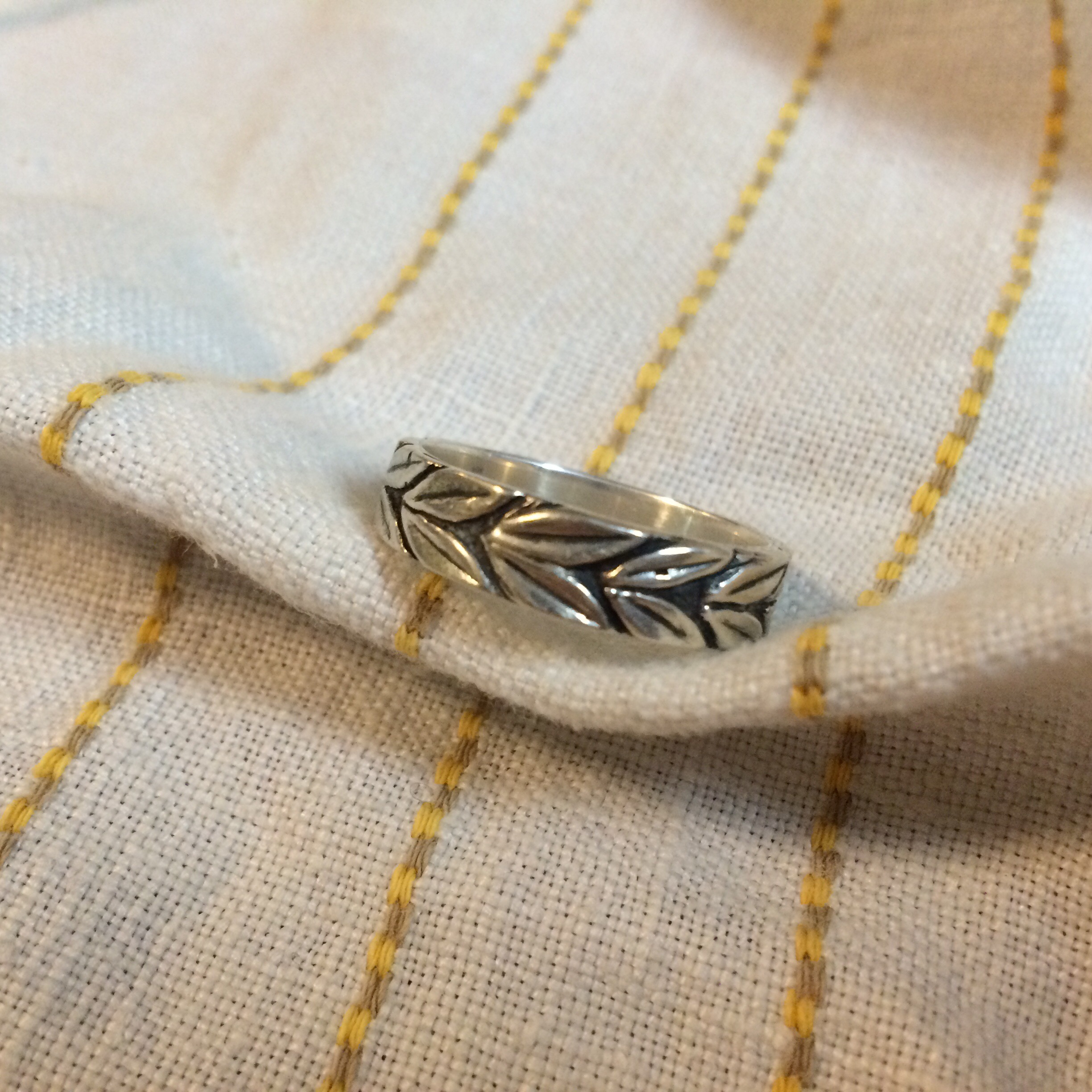

Laurel Cavanaugh, aka The Mad Jeweler, SKA Mistress Morgan(?) of the West Kingdom; Facebook, Etsy shop. Put simply, she does stunning work, from replica pieces of medieval and renaissance jewelry to modern interpretations to SCA-specific designs (like regalia). I have a laurel ring from her that was given to me at my elevation that is one of my most prized possessions on this earth, partly because of the love that came with it and partly because it’s just so beautiful. Highly recommended!


Izmir Jewelry, not a SCAdian. Etsy shop. I ran across this Etsy seller one day while browsing everything tagged “Roman jewelry.” Their work is inexpensive vermeil (gold-plated silver) and has a distinct and recognizable look (hammered, relatively rough stones, etc.) that I happen to really like. I bought a ring on a whim, and loved it so much that now pretty much every time I need a little retail therapy I get myself a ring or some earrings. (Don’t judge.) Shipping is surprisingly fast to the US. Because these are plated, they won’t last forever and they won’t stand up to much abuse. The gold is honestly already wearing off on my rings. But for something that I got to be costume pieces, they do what I want them to do, which is be big and shiny and look passably medieval (more passably Roman) while still being something I could take camping without fear.

Twilight Forge — Etsy Shop. Source for cast bronze / brass brooches and pins. I have a set of La Tene brooches to wear with my Iron Age Celtic clothing and I had a pair of beautiful quatrefoil brooches but I seem to have lost one of them last summer 😦 Edited to add: I found the missing brooch last weekend! Yay!!! This seller has great prices and fast shipping.

Period Food is Yummy: What to Bring to an SCA Potluck

This is reposted from my old blog on Blogger.

Let’s start with the basics:

  • Keep in mind the scope of the SCA:
    • The SCA is officially recreating pre-1600 Western Europe, with some wiggle room for “cultures that would have had contact with Western Europe.” This can help you figure out how to focus your research into cooking, and this is what I (and most SCAdians) mean when using the shorthand of describing something as “period.” So while saying something is period is kind of a bad sloppy habit we have (when we should say “Item X is historical for time period Y in place Z”), it is an easy way of delineating “SCA acceptable” from “outside our scope.” (And note that I’m not making any comment on whether or not the SCA should be more or less limiting than this.)
  • Make an attempt:
    • In the SCA, we require that everyone make an attempt at period clothing. Similarly, everyone can make an attempt at making and eating period food. Even if all anyone did was commit to not bringing blatantly modern foods to potlucks (pizza, brownies, etc.), we could significantly improve the quality of events. It is my aim to educate as many people as possible about historical (and passable) options that are achievable for people with various skill levels. You do not have to make a cockentrice right out the gate (but if you want to, go for it!) — everyone taking one step toward historical authenticity has a more powerful impact than a small minority of people taking a thousand steps and leaving everyone else behind. Take that step with me, I’ll hold your hand 🙂

Approach historical cooking with the right mindset:

  • Period food is yummy!
    • Real people really ate this food, and just as when you branch out of your comfort zone and try food from another country, trying food from another time can often result in you discovering that, in fact, the unfamiliar can often be awesome.
  • Stick to your strengths.
    •  It’s okay to stay within your comfort zone, especially at first. Love to bake? Try some 16th century cookie recipes. Can’t read Middle English, or uncomfortable just winging it with no quantities or specific cooking directions? Look for recipe translations and modernizations (stay tuned for links and cookbook suggestions).
  •  Food is sacred.
    • There’s a reason why cultural celebrations (ahem: including SCA feasts) and religious ceremonies center around food. Food is a big deal! You will spend a phenomenal portion of your life acquiring, preparing, and consuming food; why waste that time? Food can and should be more than just bare nourishment. Food is art, food is passion, food is science, food is love, food is joy. Within the SCA, historical food is a way to experience historical life. Take that opportunity, it’s worth it.

Where to start:

  • Avoid new-world and blatantly modern foods
    • Think tiny changes. If you were going to bring chocolate chip cookies to the potluck, bring shortbread instead. If you normally bring salsa and corn chips, bring hummus and pita bread.
  • Pick a culture (a specific time and place) that interests you
    • Then do some research. This can match your persona but doesn’t have to. Maybe you’re going to a potluck at an event with a theme, or maybe you just think Spanish food is tasty and you’d like to try some historical Spanish food. If you can personalize your quest for historical food a little, you’ll have more fun with the journey.
  • Find a recipe or two that looks tasty and make it
    • See my suggestions for sources below. Maybe cook something in small quantities at home to try it out before taking it to an event to get a sense of it. If your first attempt doesn’t appeal to you or doesn’t work, don’t give up; try something else.

A word on New World vs Old World foods: the conquest of the New World changed the global food landscape forever. There are a lot of foods that we take for granted that medieval people did not know about. While it’s true that some New World foods were adopted into European cuisines prior to the end of the SCA’s time period, the forms they took at first are often ones that are complete unfamiliar to us now; white potato jam is period, mashed potatoes not so much. One of the simplest ways to begin to explore period cooking is to try going without New World ingredients. Don’t despair, though: there are lots of Old World foods that are awesome in and of themselves. Here are some representative lists of New World and Old World foods; these are far from complete:

  • New World: Potatoes, sweet potatoes, corn, vanilla, chocolate, tomatoes, squash (winter and summer varieties), most beans, turkeys, quinoa, pecans, cashews, peanuts, macadamia nuts, Brazil nuts, cranberries, peppers, sunflowers, avocado, agave, huckleberry, jicama, manioc, wild “rice”, yucca, green beans
  • Old World:  Barley, wheat, rye, carrots, parsnips, turnips, rice, lentils, garbanzo beans, fava beans, cows, sheep, pigs, goats, chickens, ducks, geese, deer, elk, many types of fish, millet, cabbage, Brussels sprouts, lettuce, most common herbs and greens, almonds, walnuts, chestnuts, eggs, dairy, apples, onions, garlic, leeks, bees (honey), cane sugar, artichoke, asparagus, beet, cantaloupe, citrus, cucumber, fig, garlic, grape, hazelnut, peaches, pears, radishes, pheasant, peacock, heron, mushrooms, gourds, and more
  • Totally modern: Chemical leavening agents, industrially processed foods, and many vegetable varieties (for example rutabagas and sugar beets)

Where to find recipes online:

My favorite cookbooks for beginners.

Things you can bring even if you can’t cook:

  • Desserts: candied ginger, dried fruit, shortbread cookies, dates, yogurt with honey, marzipan / almond paste, fresh whole or cut up fruit, candied nuts, baklava, candied orange peels, quince paste (sold as “membrillo”), fruit and nut “cake” (Spanish “Pan de Orejon”), butter wafer cookies (Trader Joe’s has these), tiny fruit tarts
  • Nibbles: cheese, olives, nuts, hard boiled eggs, hummus and vegetables / pita bread, salami and other cured meats, pickled mushrooms, pickled vegetables (check the New World / Old World lists above), pâté
  • Salad mix with oil and vinegar dressing
  • Rotisserie chicken, pre-cooked ham, smoked fish, sausages and mustard, pre-cooked meatballs (especially with a simple medieval sauce like any of the ones based on vinegar, spices, and bread crumbs)
  • Pasta (cheese ravioli, egg noodles, etc.) with butter and cheese

Final thought: Don’t forget that this is supposed to be fun. And historical authenticity is really fun.

Really:

Candied Plums

Sugar plums are just comfits. Not plums. I know that. But I still wanted to make sugared plums.

Inspiration:

TO DRIE APRICOCKS, PEACHES, PIPPINS OR PEARPLUMS
Take your apricocks or pearplums, & let them boile one walme in as much clarified sugar as will cover them, so let them lie infused in an earthen pan three days, then take out your fruits, & boile your syrupe againe, when you have thus used them three times then put half a pound of drie sugar into your syrupe, & so let it boile till it comes to a very thick syrup, wherein let your fruits boile leysurelie 3 or 4 walmes, then take them foorth of the syrup, then plant them on a lettice of rods or wyer, & so put them into yor stewe, & every second day turne them & when they be through dry you may box them & keep them all the year; before you set them to drying you must wash them in a litlle warme water, when they are half drie you must dust a little sugar upon them throw a fine Lawne.
– Elinor Fettiplace’s Receipt Book, 1604

Full confession, I didn’t follow this very closely. I might try this again but stay more true to the recipe.

I had some nice Italian prunes (fresh ones, not dried ones; dried prunes is not redundant, prunes are a specific category of plum) that I wanted to try this with. I carefully pulled each one apart, pulled out its stone, and placed them skin up in a single layer in a heavy saucepan. Then I covered them with sugar, covered the pan, and turned the heat to very low. I let them heat without stirring them at all until they had exuded their own juice and the sugar was fully dissolved. I took the lid off, resisted the urge to stir them, and kept cooking until the sugar had made a thick, bubbly syrup.

I took the plums off the heat and let them cool just a bit, then transferred them to a cookie sheet with a Silpat. I dried them in a warm oven for 2 hours, then transferred them to my food dehydrator. I dried them, checking periodically, for several hours, until they were nearly dry but still gummy. Then I took the still sticky plums and and rolled them in sugar. Finally, I let them sit in the sugar for multiple days until they were fully dry.

Here are the finished plums:

  
As an added bonus, this yielded an amazing plum syrup which I could pretty much eat with a spoon.

Working Women of York: Brewsters

This is part of a series of posts in which I gleefully speculate about some of the women’s names found in the York Register of Freemen. To read my full research on these women, go here.

A woman with a flagon

“Brewing was women’s work.” At least, that’s what they tell us. The reality, as usual, isn’t that simple. Many women supplemented their income by brewing. In the 12th and 13th centuries, ale was brewed on a small scale by a large number of women. The brewing industry during this time was not heavily regulated, and brewing tended not to be a guild occupation.

This changed during the later medieval period. Starting in the 14th century, brewing as an industry became more concentrated; professional brewers emerged, responsible for large quantities of commercially produced ale. The village alewife slowly disappeared. There are a number of explanations for this phenomenon. I know that I cannot do them justice here. If you are interested in learning more about brewing, Judith Bennett (as usual) has the best writing on the subject: Ale, Beer, and Brewsters in England: Women’s Work in a Changing World and  “Misogyny, Popular Culture, and Women’s Work” in History Workshop Journal 31.1 (1991).

What does the evidence from York show? Because I only studied the 13th and 14th centuries, I can’t give a full account of the possible rise of male brewers through the 15th and 16th centuries, and because my source material only gives evidence for guild members I can’t really speak to the many women who may have worked as brewsters without having the social and legal protection of a guild. But here is what I do know.

During the reign of Edward I, I found no recorded brewers of either gender, however two men appear to have brewing related surnames, the del Brouhous brothers. During the reign of Edward II, two female brewsters appear: Alicia de Wetwong and Isabella Brewer. There were no male brewers during this time period. During the reign of Edward III, there were no female brewers entered into the Register, yet six male brewers. Incidentally, all the male brewers are noted as breuster or brewster; although I have always read that the -ster suffix denotes that the occupation is female (webster = weaver, baxter = baker), I actually did not find evidence of this in the Register, instead, men seem to have been given -ster occupations too.

While these data are very sketchy, they do seem to suggest a trend of a rise in professional male brewers in the late medieval period. Did this trend continue? That should be a relatively simple set of data to pull from later volumes of the Register of Freemen if one is interested. I might explore this more, and in the meantime I think one of you reading this should try to track down an answer!

Here are the stories I tell myself about Alicia and Isabella: they are friends, sharing trade knowledge freely with one another (although Alicia things Isabella’s ale is too sour). Plenty of other women brew, but only Isabella and Alicia do it as their only occupation. Some of the bakers use barm from both brewers to make expensive bread for the richer citizens to enjoy. Isabella likes to use stale beer when she boils bacon. Alicia is a tanner’s widow; she misses her husband, but mostly she misses the income from his business. Isabella has never been married and is thankful she doesn’t have to take in laundry anymore. Alicia worries about her daughter, who should be married already but hasn’t shown an interest. Neither woman has any sense they’ll pass their business on when they die.

Working Women of York: Queneld

This is the first in a series of posts in which I gleefully speculate about some of the women’s names found in the York Register of Freemen. To read my full research on these women, go here.

We shall start with the earliest female name I found in the Register:

Queneld, reign of Edward I. Occupation: serviens (apprentice). Note: serviens Roberti de Hedon; name cannot be definitively gendered.

Queneld… Oh, Queneld. I really want you to be a woman. Let’s start there. I looked up all the information I could readily find on medieval English naming conventions. I talked to every names herald I know (and perhaps surprisingly I think I know some pretty serious heralds). Some sources  and people said Queneld was a female name. Some said Queneld was a male name. Some were certain. Some uncertain. I’m sure people will weigh in in the comments.

The way we choose to interpret this name has deep implications. If Queneld was a woman, she was the only woman in the Register who gained her freedom through apprenticeship. She would provide evidence that women could at least sometimes be apprentices, and that they could in some remote realm of possibility rise from apprentice to Mistress.

Of course, there’s another way to look at it: I think it’s easy to say that there being no other evidence of women as apprentices supports the claim that Queneld is a male name.

I think this is the problem with researching medieval women.

The information is so sparse and requires so much conjecture that whatever set of assumptions you start from will determine the conclusions you draw. This frustrated me so much in my research. I kept second-guessing myself — “Is that just my bias? Am I reading too much into it? What’s real, anyway?” It turned the research into a slog. Eventually, I came to a decision: I’ll be honest about where I made leaps and why, but when I have a chance to believe that women did things, I will; too many people do the opposite, and so I’m okay with evening the score a bit.

So back to Queneld. If she was a woman, she was unique, and thus is noteworthy. I can’t find Robertus de Hedon elsewhere in the Register, so we have no indication of what his occupation was. Another mystery to tack onto Queneld.

Here’s the story I’ve made up about her in my head, though: She was a hard worker. Her parents arranged her apprenticeship; maybe Robertus was a relative. She impressed him with her quick wit, and he was proud to stand up and speak for her before the Guild. She paid her fee and the registrar wrote her name down. That night she had chicken and spiced ale. She led a good life.

Or, whatever, some guy in York had kind of a weird name and was otherwise entirely unremarkable. I know that could also be the truth, I just choose the better story. Women are written out of too many stories, I’d rather write one in where she didn’t really exist than risk erasing one more.

FUN FACT!

So it turns out that not having a functional computer at home utterly destroyed my posting momentum. Sorry about that. Of course, it also turns out that I haven’t done anything remotely interesting since getting elevated. Sorry about that too.

But now I have a new laptop at least, so as soon as I start doing interesting things I’m sure I’ll start writing about them!

Easy metal project: basic penannular brooches

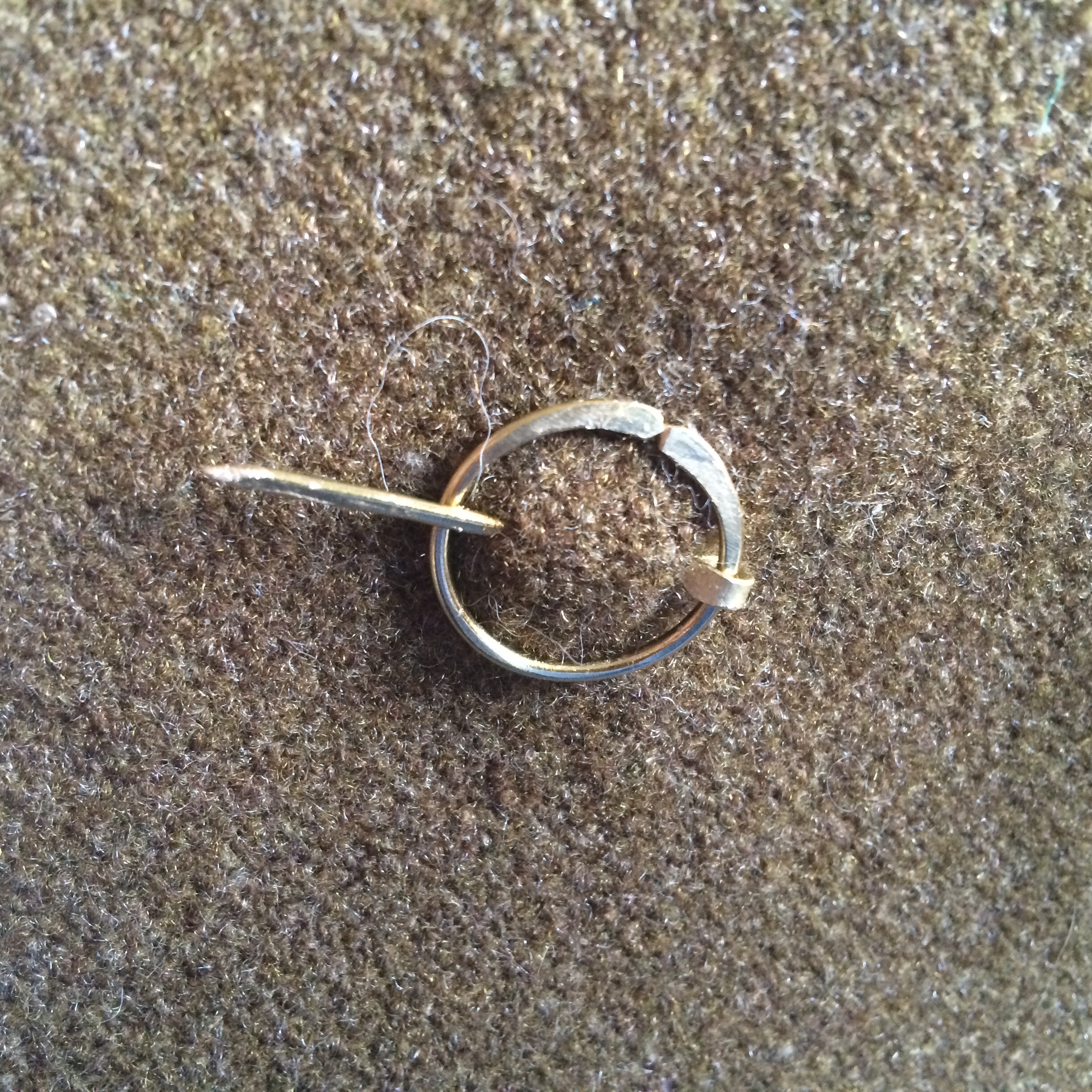
I’ve started playing with making some simple dress accessories, like pins, using wire, and I’m finding I’m really enjoying it. My first project was a number of small brass penannular brooches:

  
These are VERY easy to make, and a great starter project for learning basic (cold) metalworking techniques. The end product is quite handy, and would make nice pieces for largesse. I used brass wire from the craft store for these; you can also use copper wire, and I hope to work my way up to using silver or even gold (filled) wire. The wire gauge you use will depend on the size pin you hope to end up with; I used 14 ga for these. 

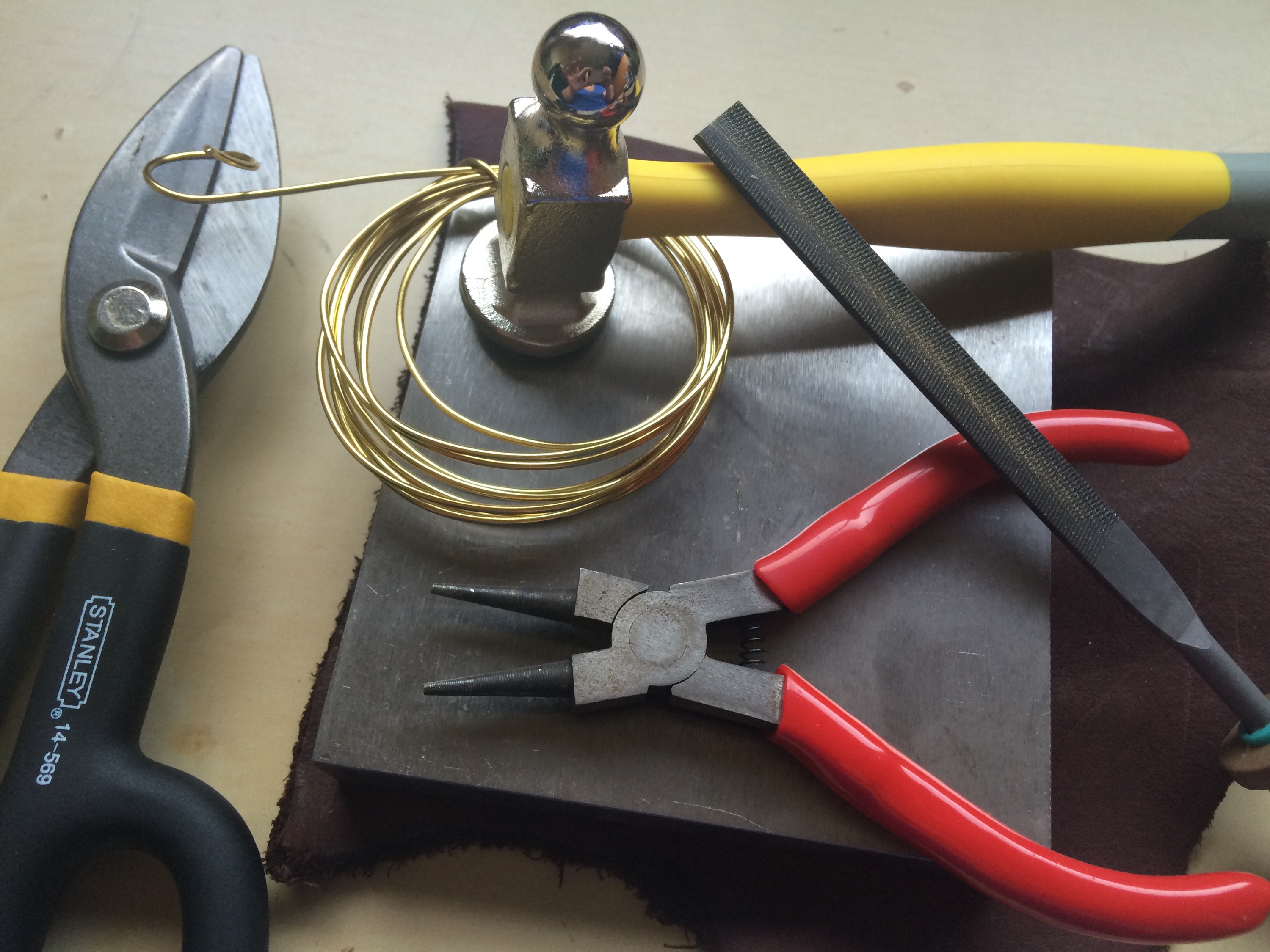
You will need some special tools to be successful:


  • A steel block / anvil or other hard surface
  • Round nose pliers
  • Wire cutters
  • Metal file
  • Chasing hammer
  • A dowel or other small cylinder (not pictured)
  • Optional (not pictured): a plastic mallet

Step by step:

  
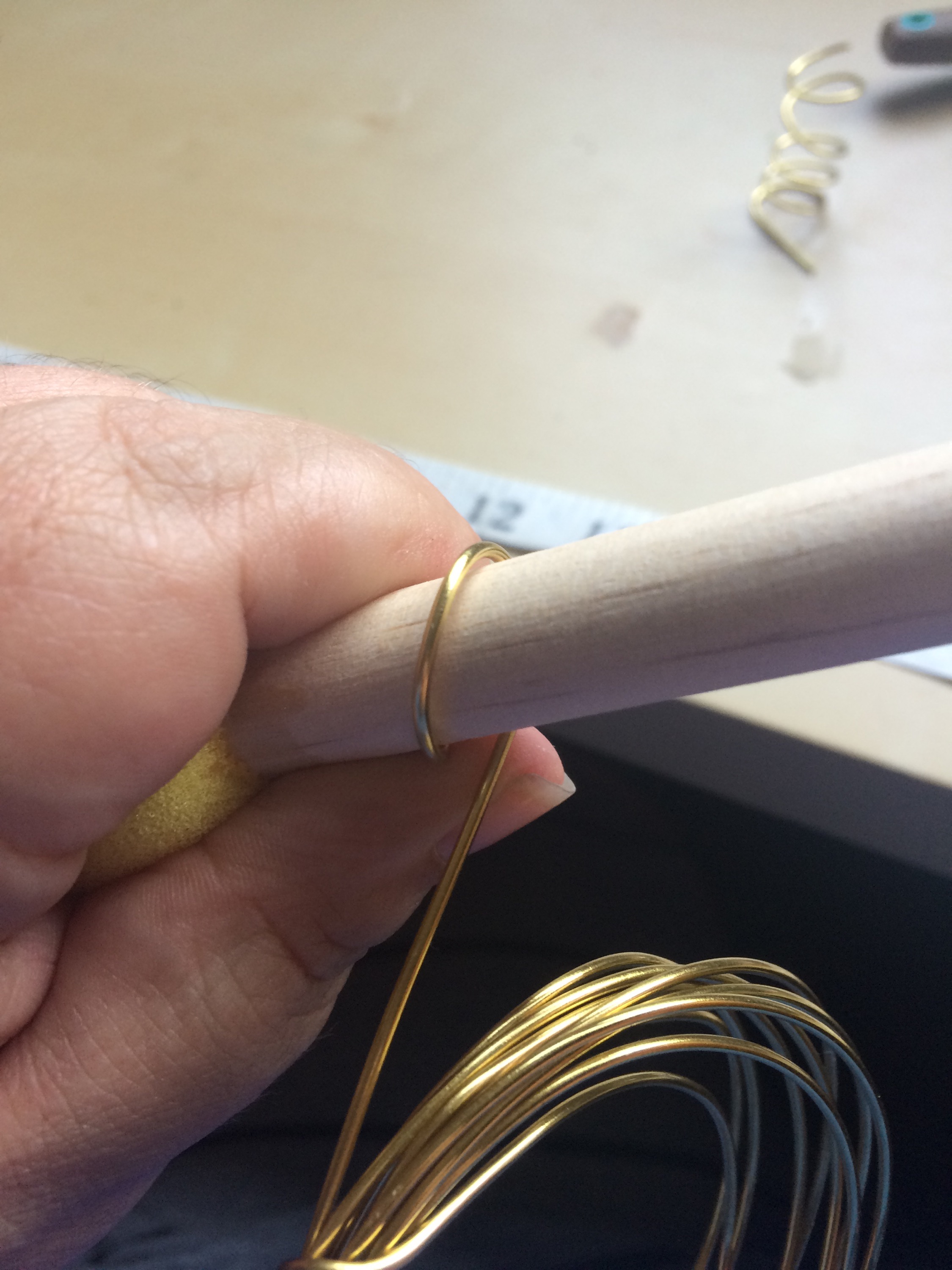
Wrap wire around dowel. 

  
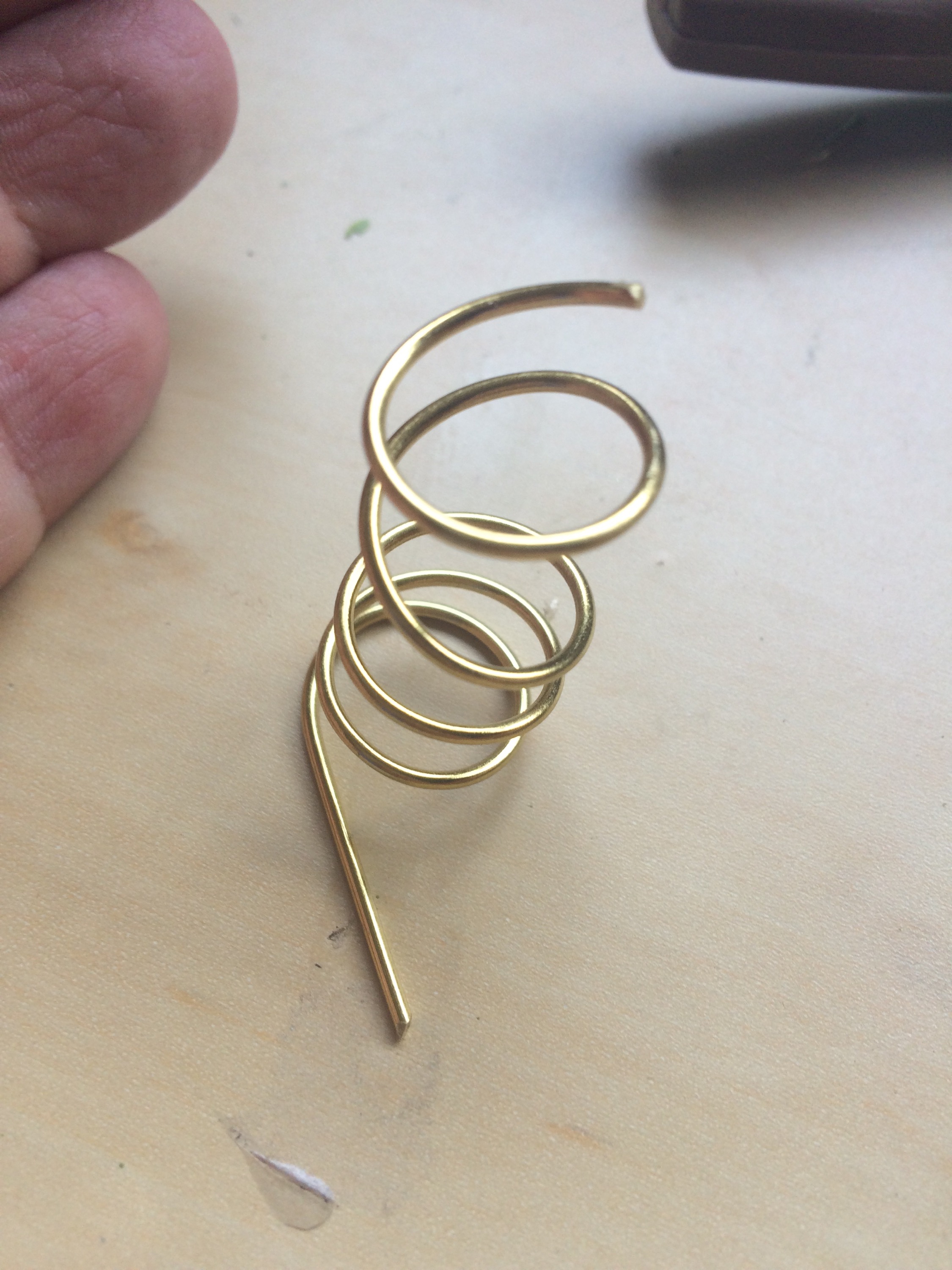
You can wrap it as a coil to make many rings at once. 

  
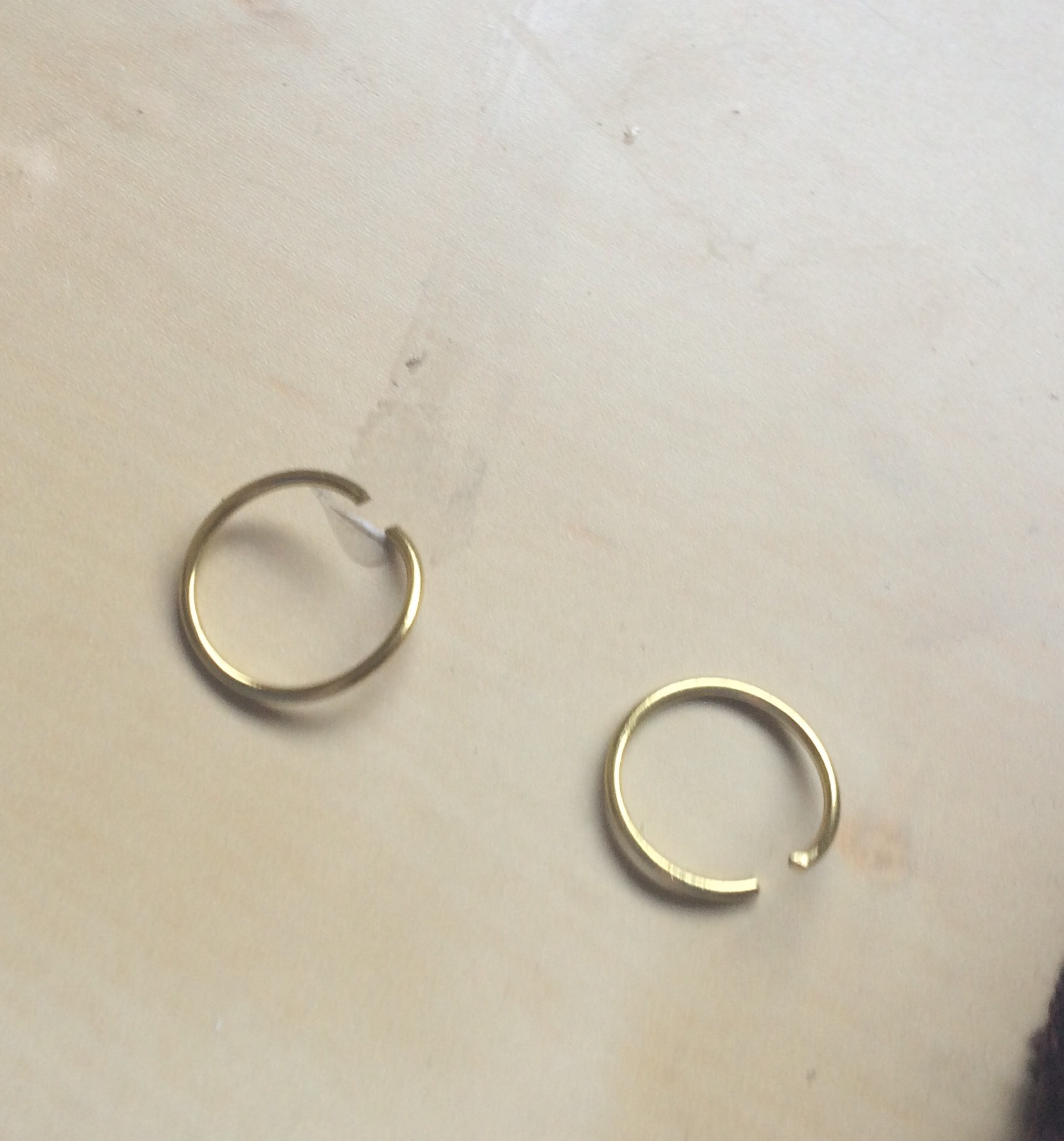
Cut the rings apart. 

  
Rings!

  
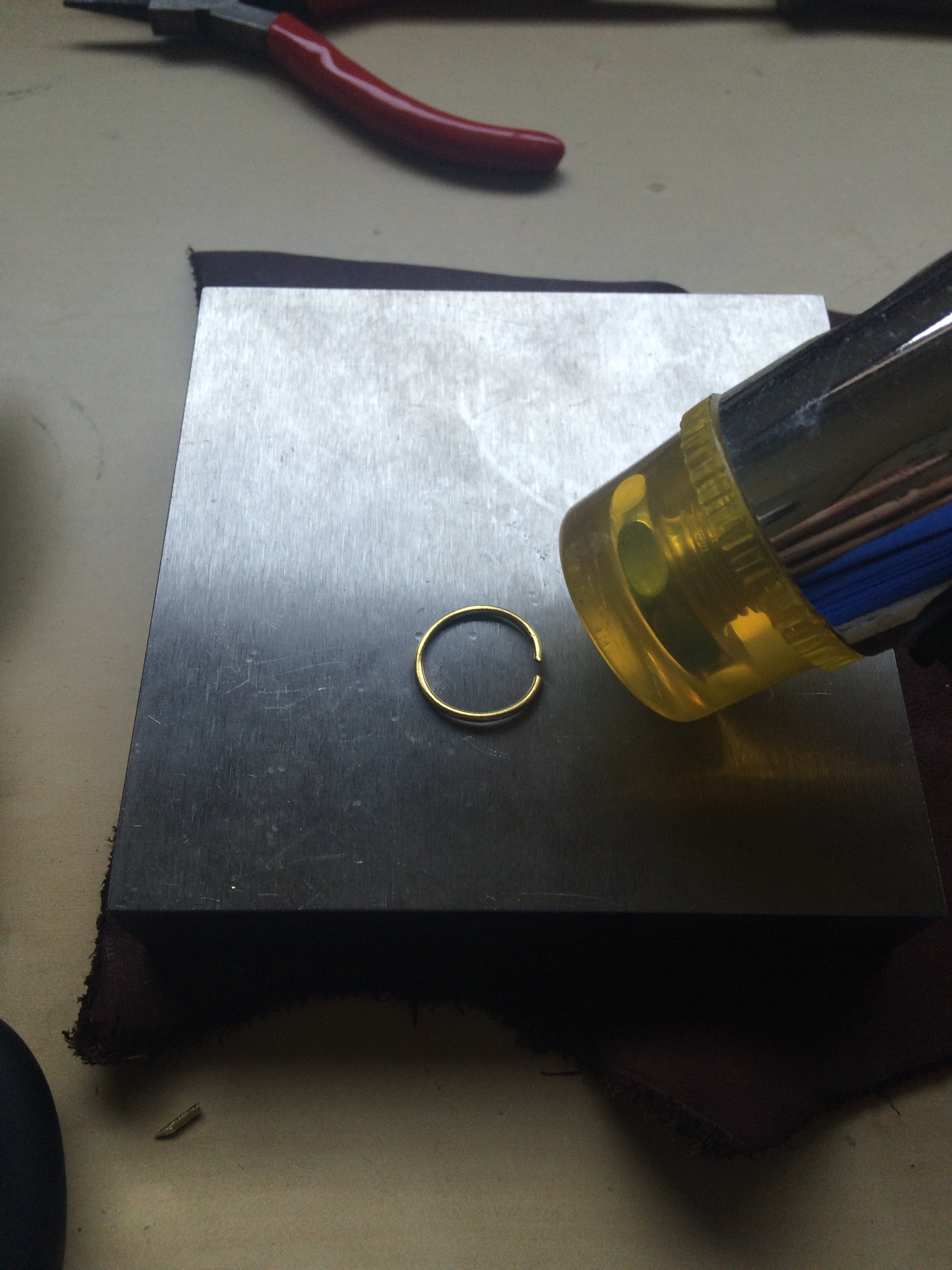
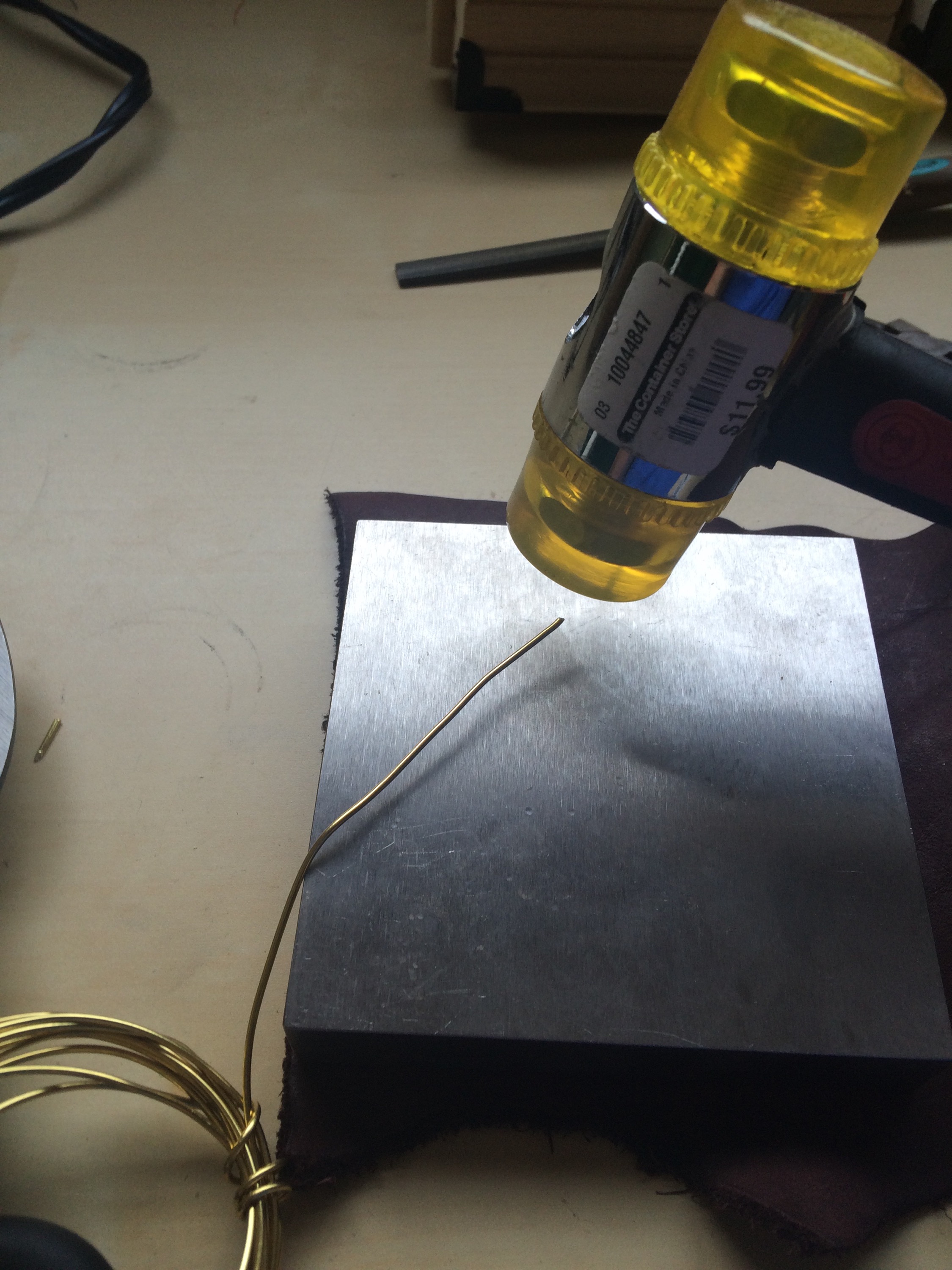
Use a mallet or the chasing hammer to gently hammer the ring flat. This should also strengthen it. Set the ring aside. 

  
Gently flatten a short length of wire. 

  
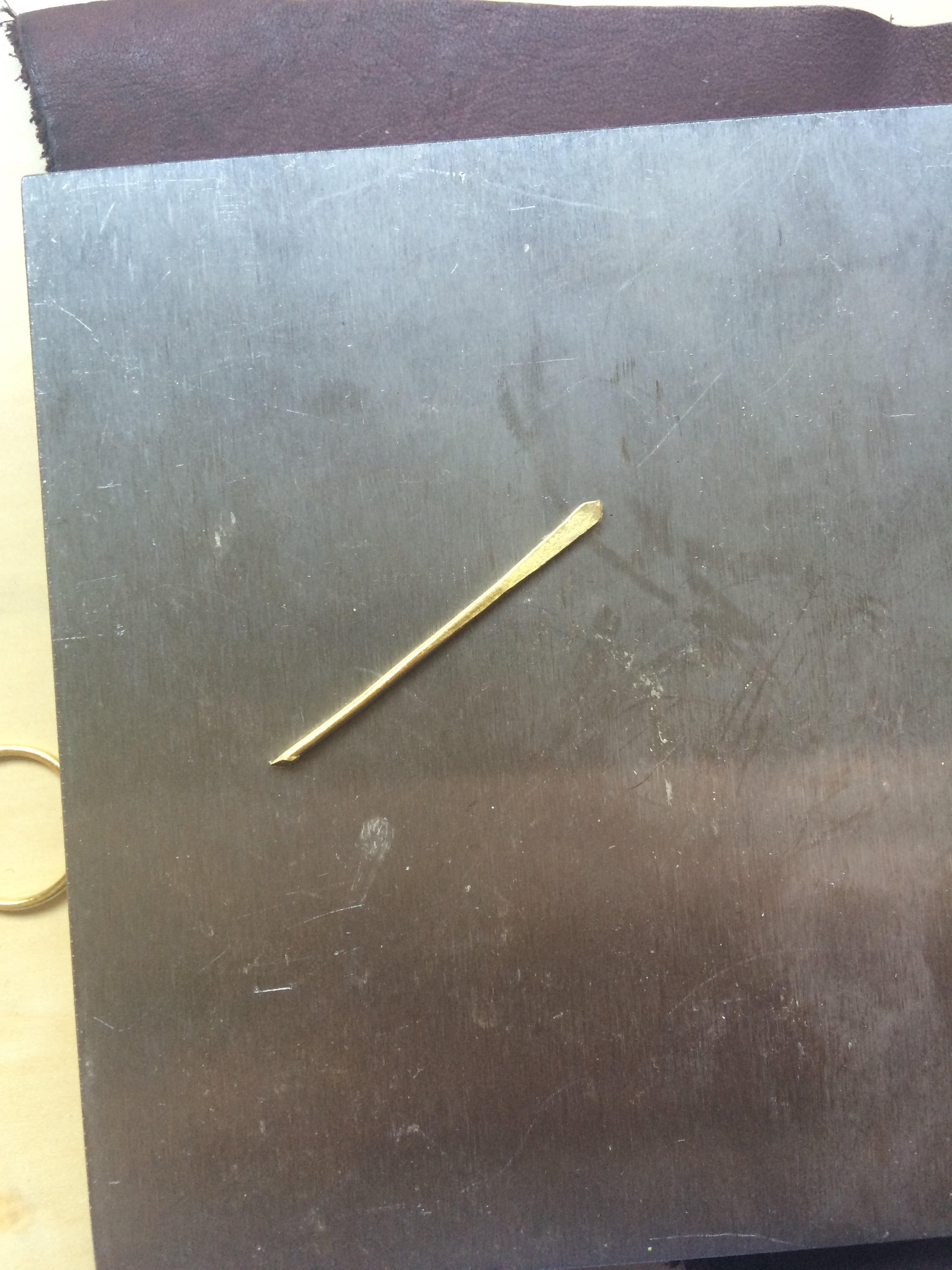
Use the ring as a guide to cut the wire. I found cutting at an angle made sharpening the pin much easier. 


Use the chasing hammer to flatten the less sharp end.  

  
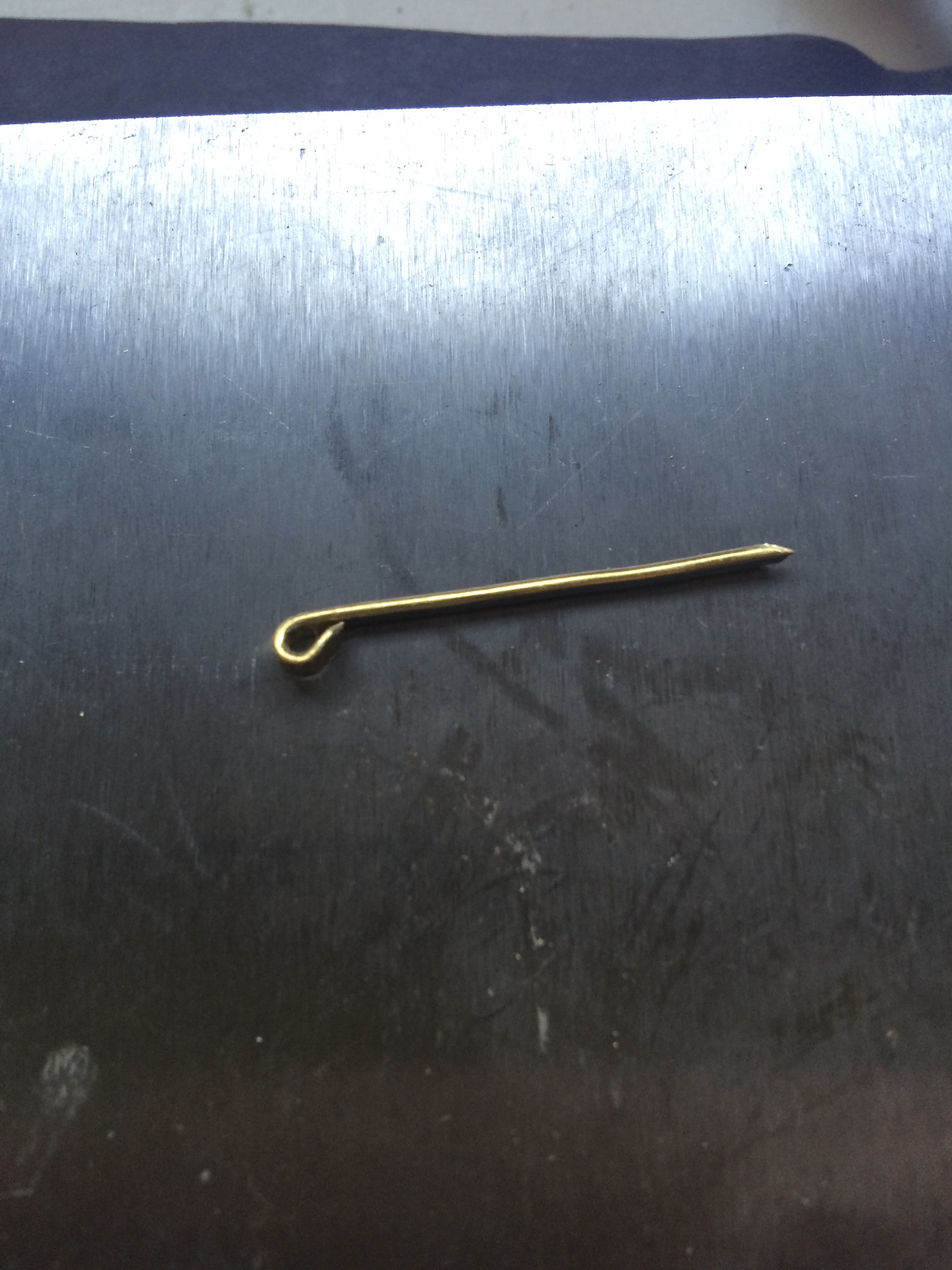
Make a little loop in the now flat end with the pliers. 

  
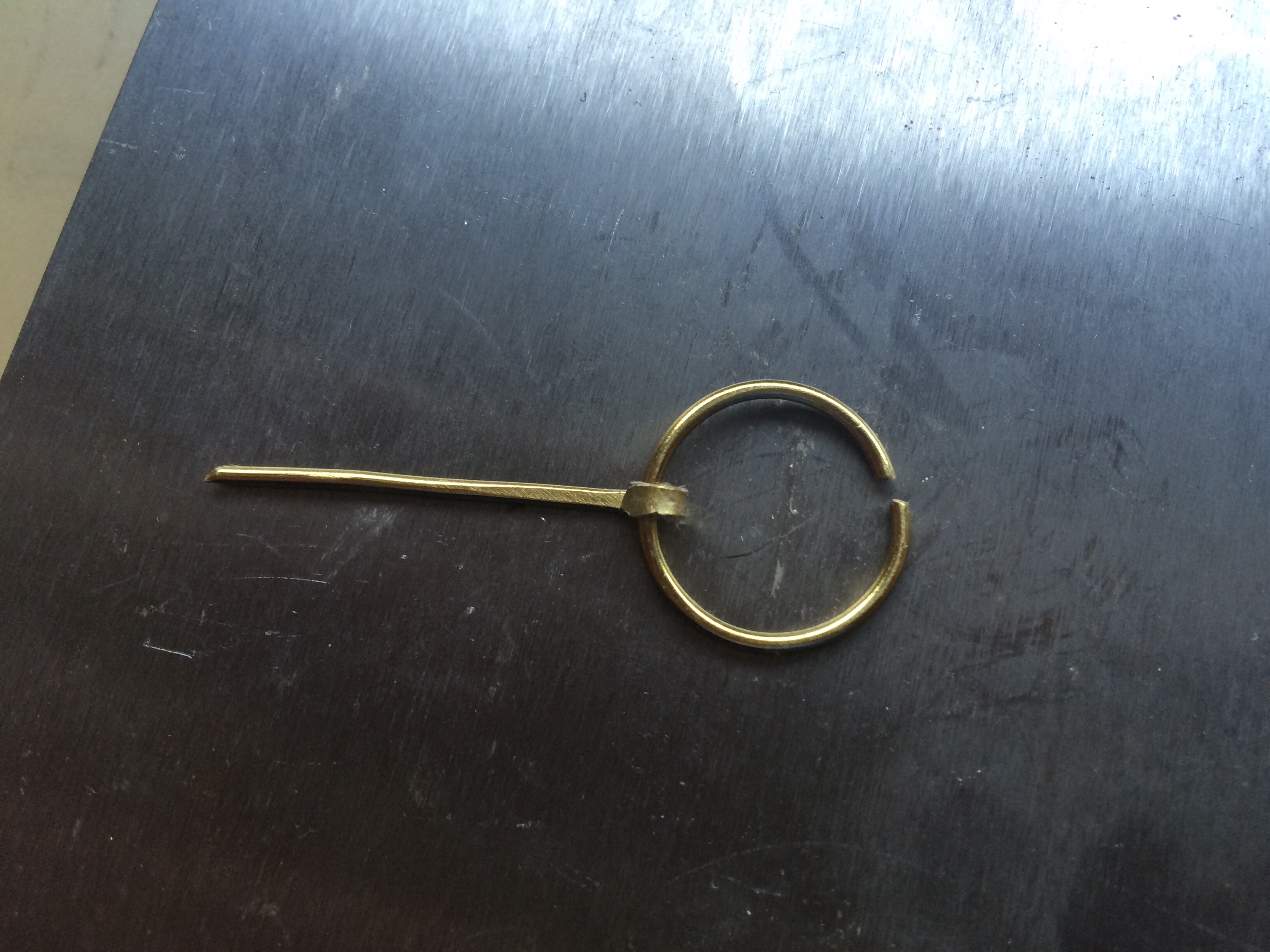
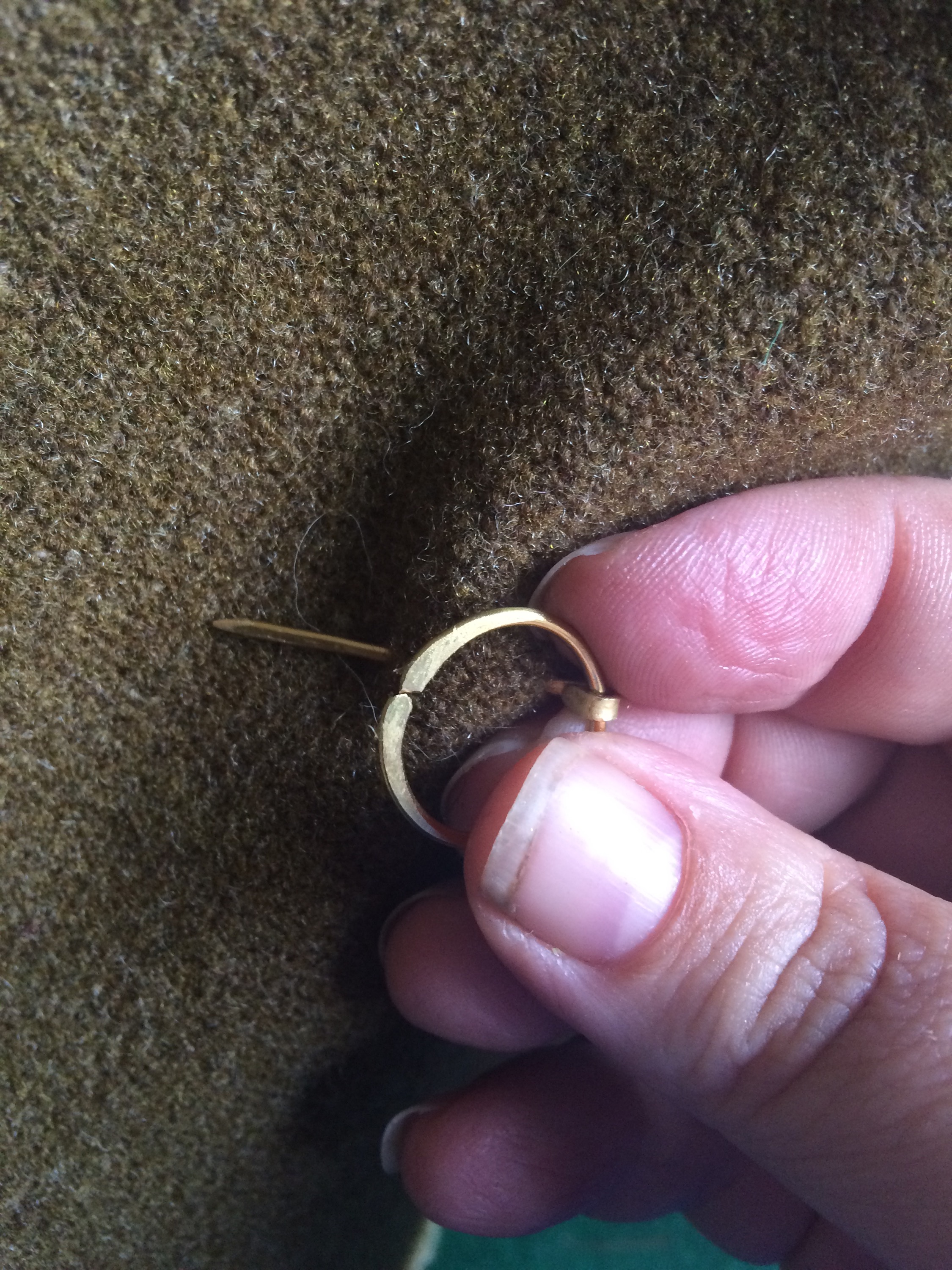
Put the pin on the ring. 

  
Use the file to sharpen pin. 

  
Use the chasing hammer to carefully flatten the cut ends of the ring. 

  
Yay! A brooch!

To use:


Easy peasy!

Some basic medieval non-alcoholic beverages 

  
There are loads of medieval Islamic recipes for non-alcoholic beverages, but (Christian) Western Europeans were pretty happy subsisting on ale, mead, and wine. Of course, to be fair, the ale was pretty weak for most drinkers, and the wine was often watered, and in spite of what you may have read people did drink water. But there are a few scattered references to non-alcoholic beverages in medieval (western) tests which I’d encourage you to try at events. Typically, these seem to have been medicinal or wellness preparations, although I choose to think “ginger ale for a tummy ache” instead of “guafinesin for a cough” level of medicinal. Barley water (or tisane) is a famous option in this category. My favorite non-alcoholic beverages are those for which I can make long-keeping concentrates to mix with water at an event. Here are two that are at least plausibly historical for medieval Western Europe. 

Rose Drink: The Libre de Diversis Medicinis apparently mentions are drink made with rose petals and honey. I take a large quantity of rose petals (dry or fresh) and steep them in boiled water until they have lost all color, then strain them out and mix the resulting water with twice as much honey. The more petals you use the stronger a flavor you’ll get. I have found the syrup will keep at least a month unrefrigerated. To use, mix with water to taste. (More information and another redaction can be found here.)

Oxymel: This is just a Latin name for a nigh universal beverage made with water, vinegar, and honey. Use wine or cider vinegar and good local honey. I like equal parts of each heated together to make my syrup, which I then dilute in plenty of water. You can also use a 2:1 honey:vinegar ratio if you have more of a sweet tooth, and I’ve sometimes dissolved two parts honey in one part water before adding one part vinegar; this works well for honey that’s crystallized. 

The photo shows ready to drink versions of both these in glass bottles for easy transport to an event. The oxymel is amber colored while the rose drink is… well, rose colored!

Hopefully these can slake your thirst on a hot day.

Simple gluten free pie crust

…using only historical ingredients! 

  
I made some tiny peach tarts using a recipe from Good Housewife’s Jewell, and made half of them gluten free. This crust was very easy and handled incredibly well, for both the small (in a ramekin) and mini (in a mini muffin tin) versions. 

Recipe:

  • 5 oz brown rice flour
  • 2 oz chestnut flour
  • Pinch salt
  • Optional: double pinch sugar, for sweet pies only
  • 1 oz butter (or lard — Elizabethan pastry recipes tend to call for butter and this was otherwise vegetarian)
  • 3/8 cup boiling water
  • 1 egg
  1. Mix together dry ingredients.
  2. Combine the butter and boiling water (I used a kettle to heat it — you can also use more water and heat the butter and water together) until the butter is fully melted. A glass measuring cup is ideal. 
  3. Add butter-water mixture to dry ingredients and mix vigorously. 
  4. When cool enough to handle, add the egg and knead until it forms a smooth dough. 
  5. Roll out and use as desired. Makes enough for a single standard crust. (Double recipe for a top crust.)

If you can’t find chestnut flour locally, I order mine from nuts.com. 

My Peerage Oath

For my elevation, I modified the Oath of the Freemen of York to use as my oath to the Crown. Here is the text, and if there’s anyone else out there with a craftsperson persona from high medieval York, I gleefully give permission to use this for your own Court ceremony, or to modify it to suit you. (If you do, will you let me know? We should clearly be York buddies!)


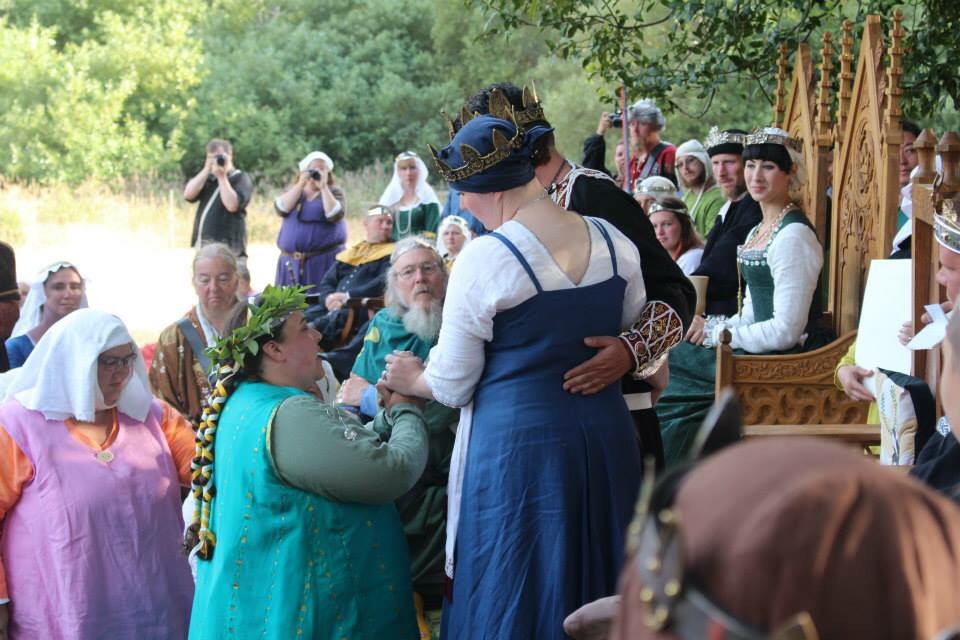
photo by Ivan Cauldwell
 
New freeman, with hands between the King’s:

“Before the Crown, peers, and populace: that I from now forth shall be trustworthy and true to the Crown sovereigns of [Kingdom], and to the same Kingdom, and I shall save and maintain to our said sovereigns and their heirs and successors. And all the franchise and freedoms of the said Kingdom maintain and uphold at my power and cunning, with my body and my goods, whenever it has need of help, so say I, [Name].”

(Optional: I switched to another symbol of state, the Orb, at this point; the original implies that the new freeman was swearing on a book — I assume a Bible / religious text but I don’t actually know — and I wanted to keep the same rhythm.)

Crown:

“And by this orb you shall be obedient to the Crown sovereigns of this kingdom that ere or shall be, for the time being and justified after the law, customs, and ordinances of this same Kingdom. And if you know of anyone working in any craft or occupation with outstanding skill and not franchised, you shall make it known to the Crown, your Peers, or their representative for the time being. The works of any stranger nor of man unfranchised you shall not claim as your own by the will of the Crown, or face their wrath. The council and private of this said Kingdom you shall keep. All these points and articles afore rehearsed you shall hold earnest yourself and for nothing leave. But you shall so do. So say we, [King] , and so say we, [Queen], and by this orb.”