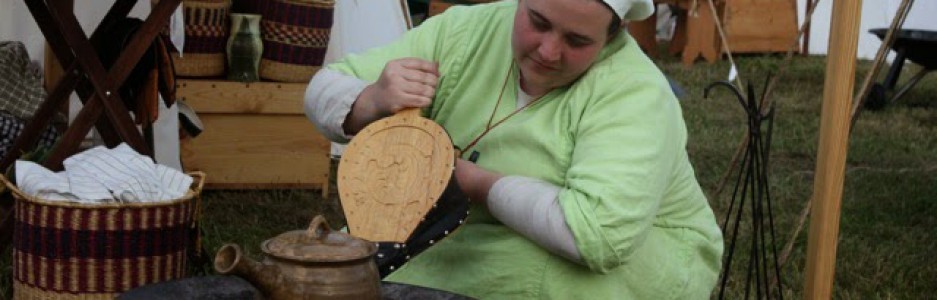
Reflections on the whole Laurel thing

a laurel wreath with a squared symbol
Image by Cara Dea da Fortuna

I’ve had a lot to chew on since May Crown. The whole experience of the offer, the lead up, the vigil, and the elevation ceremony has been incredible. I’ve gained a much deeper appreciation for the Society and what it means to me, and come to see my place in it with much more clarity. I wanted to share a few of my thoughts here.

One: It’s not about me anymore. The night after my offer, I didn’t sleep a wink. I lay awake feeling “all the feels” and ruminating on what it all meant. Around sunrise, I left the tent (and my sweet snoring wife) and took the dog for a long walk. I looked around at all the tents, the banners, the physical trappings of this game that I love, and a that’s the thought that crystallized: It’s not about me. Being offered Peerage is about the people who believe in me, and being a Laurel will primarily be about building others up and making the Kingdom and the Society better. This shift from self to others exhilarates me. I love teaching, and mentoring, and talking about awesome people. My post-Laurel life is going to be amazing!
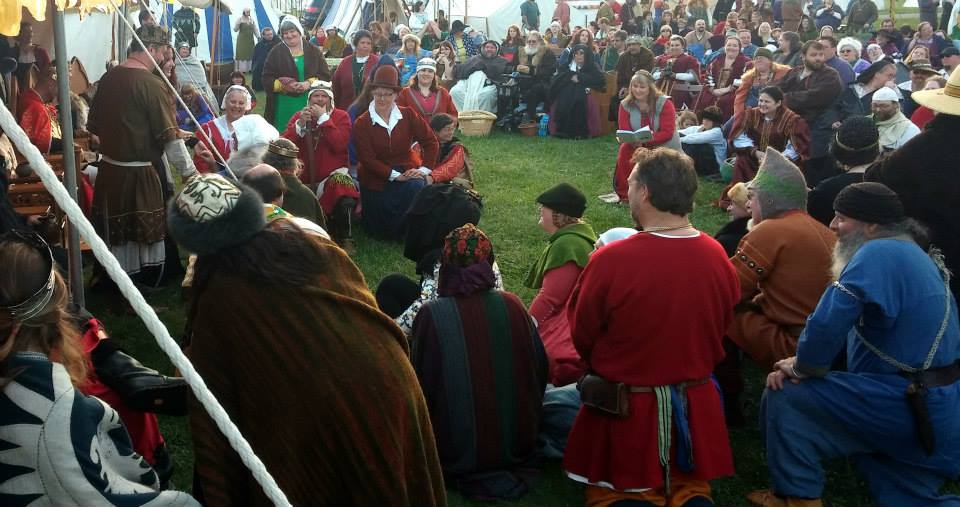
A photo of SCA royal court, many people in historical costumes.
That little white blob in front of Their Majesties is me; photo by Ignatius

Two: I am enough. I am one of those people who believes that the relationships I have and the kindness other people give me is always conditional; I don’t really deserve friendship but can earn it if I work hard enough. I’m working on that. But the entire experience of being elevated was to realize that there are people in my life who like me for me. I felt like I floated into Court, buoyed by love. I will still strive to be a kind person, to live my life with honor, and to return the love that is given to me, obviously, but I don’t feel the same sense that I have to perform to gain friends; the doubting voice that snipes on me is a little quieter now, and that’s a good thing.
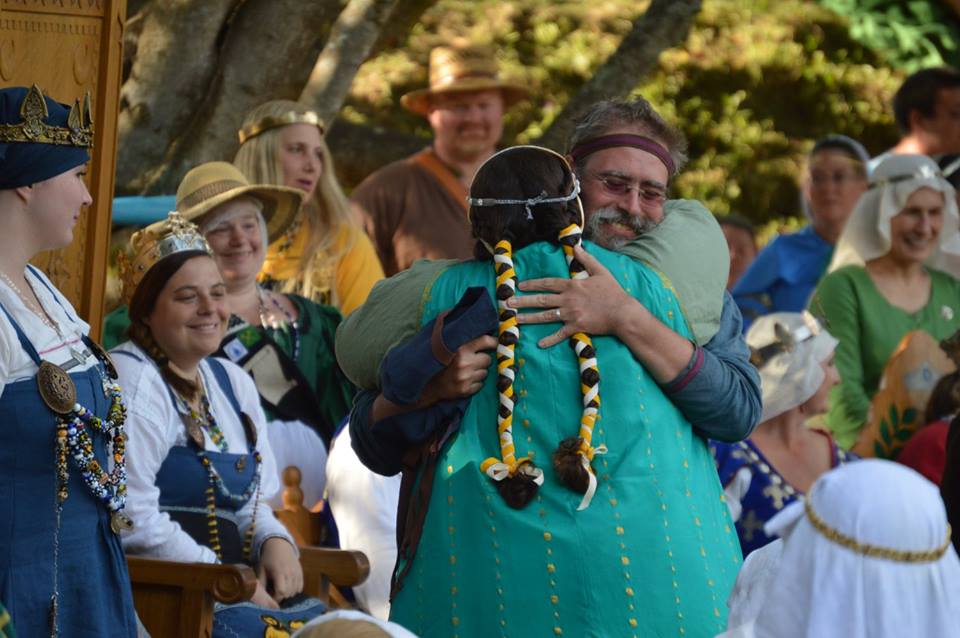
Myself and my Laurel hugging in SCA Royal Court.
My master, Refr, releasing me from fealty with a hug. Photo by Lisa Morello.

Three: Everyone’s path is different. I joined the SCA at 17, blossoming from an awkward teenager into an awk-dorable (so awkward it’s adorable) adult. Now I’m just shy of 15 years in the Society — college and grad school and work challenges have meant the SCA has been on the back burner many times, too. I have known people who were made Laurels faster or younger, and others who took a longer way around. I kinda always knew I wanted to be a Laurel, and I always knew why I wanted to be one: I wanted to feel like I had mastered a chosen art form, know that I was a research expert, be able to shape the Society in a larger way, and have the opportunity and encouragement to have students and apprentices. I also knew that wanting to be a Laurel was not the same as desperately pursuing the “cookie” of getting a Laurel. (You don’t get a Laurel, you are a Laurel; it’s a job, not an award.) It was important to me that my pursuit of this goal take the form of always working to make myself better. I did a huge amount of soul-searching over these last few years and I really did work on becoming my best self and learning to reflect the best parts of the SCA’s shared values. However, it was also very important to me that I never lose sight of who I am, and that I not sell my personality short or ever let myself get caught up in some mythical “things I should do so I’ll be a Laurel” checklist. I don’t mean PLQs, I mean, like, “If I cook twenty feasts, they’ll HAVE to make me a Laurel!” Don’t do that. Just don’t. While looking at the characteristics that Peers have in common and looking for ways to emulate those characteristics can be a powerful exercise, don’t get bogged down in comparing your journey to others (including me!) There is no such thing as the way to become a Laurel, or a standard timeline, or any of that, because it’s hugely individual.
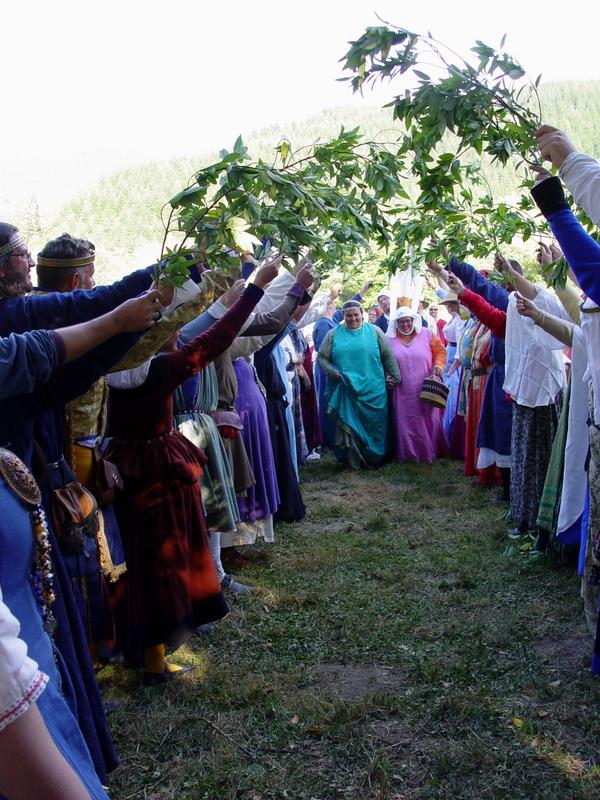
Myself and my wife walking into SCA court, while the Order of the Laurel holds laurel branches over us in a tunnel.
The Laurels present made an arbor of laurel branches to welcome me (and my Lady) into Court. Photo by Sandra Linehan.

Four: Be you. I am just a big, enthusiastic dweeb. I am like a golden retriever: I am excited about everything, I love everyone, life is so great, and I can’t really contain my (metaphorical) tail-wagging. And you know what? That’s okay. That zany, goofy, loving part of me is exactly WHY I’m able to research my interests with unwavering passion, and why I’m able to pontificate profusely on pies. Being a golden retriever of love has also been the driving force behind meeting people in the SCA, and those people I’ve met pushed me to get better and taught me incredible things — the genuine connections I’ve made with people are what got me here. This part of me is not going away now that I’m a Laurel (sorry not sorry!) Passion is what drives me, and while many (most? some?) Laurels are a little more serious than I am, they are all deeply passionate. Don’t be afraid to let your passionate dweeb flag fly.

My baron, my apprentice sister, and myself (and a crowd of Laurels and friends!) walking out of Court after my offer. I am crying so hard in this picture, and laughing so hard too. I wish I could bottle how I felt in this moment and open it for a little taste every so often. I can no longer find the name of the photographer.

Five: This is a big deal to me, and I think that’s okay. The SCA is a huge part of my life. Becoming a Peer is deeply meaningful to me. I find that I’m having a hard time articulating the experience and the meaning to non-SCAdians, actually. I’ve mostly defaulted to saying that I’ve been given a big recognition for my research and cooking/art, or to comparing it to (modern mundane) knighthood. I’m also struggling within the SCA, too: I feel like talking about what a big deal this is to me will come across as bragging, like I’m saying that I’M a big deal, but that’s not it at all. This is something that I honestly dreamed about, and having a dream come true is AWESOME. Even the way it all played out, like getting to have my vigil and ceremony at An Tir / West War with the Cooks’ Playdate folks was dreamy. I just feel so blessed and so happy, and I’m looking forward to what comes next. I feel like I was climbing a mountain, pushing myself harder and harder until I finally tipped over the summit, and when I did I discovered that there’s not just the top of the mountain, it’s like a huge plateau, and there’s a whole new world up here that I get to explore! Maybe I’ll even find new mountains to climb! It’s cliche, but my elevation doesn’t feel like a culmination but a commencement.

A car windshield with JUST LAURELED and a laurel wreath written in the dust
My car after War. It was hard to bring myself to get it washed!

This has been quite an adventure, and I can’t wait to see where it takes me next.

Make a faux enameled glass in the Venetian style

Here’s another relatively straightforward DIY project for you: a drinking glass based on Renaissance Venetian examples. 

The inspiration

Side note: I remember reading (where? when?) that these were made in Venice as an export or even something like a tourist souvenir. So even if you don’t have an Italian persona I do think it’s possible that you might have known of or even owned enameled glass. 

This project uses a modern craft supply, Pebeo Vitrea 160 paint. It can be painted on to glass and, after drying, can be baked to be made permanent. It’s easier to obtain and work with than actual historical enamel so it’s a good introduction for those just dabbling. I bought my paint at Blick Art Supplies for $6.99 per color. 

Until recently, one would have had to make do with just a regular modern glass tumbler for this project. But rather unexpectedly, the Pier 1 company apparently decided that everything old is new again and sells a particular style of tumbler that is, I’m assured, remarkably similar to 15th century Ventian glassware. Isn’t that nice of them? 

Here’s what you’ll need to paint yourself a glass:

 
Because the paint is somewhat pricey and a little goes a long way, this project is well suited to making many cups with one motif. Here I am using my household’s badge, and plan to make more glasses just like this one. 

Draw or trace your design, and cut it out:


Use tape to secure the image to the inside of the cup: 

  
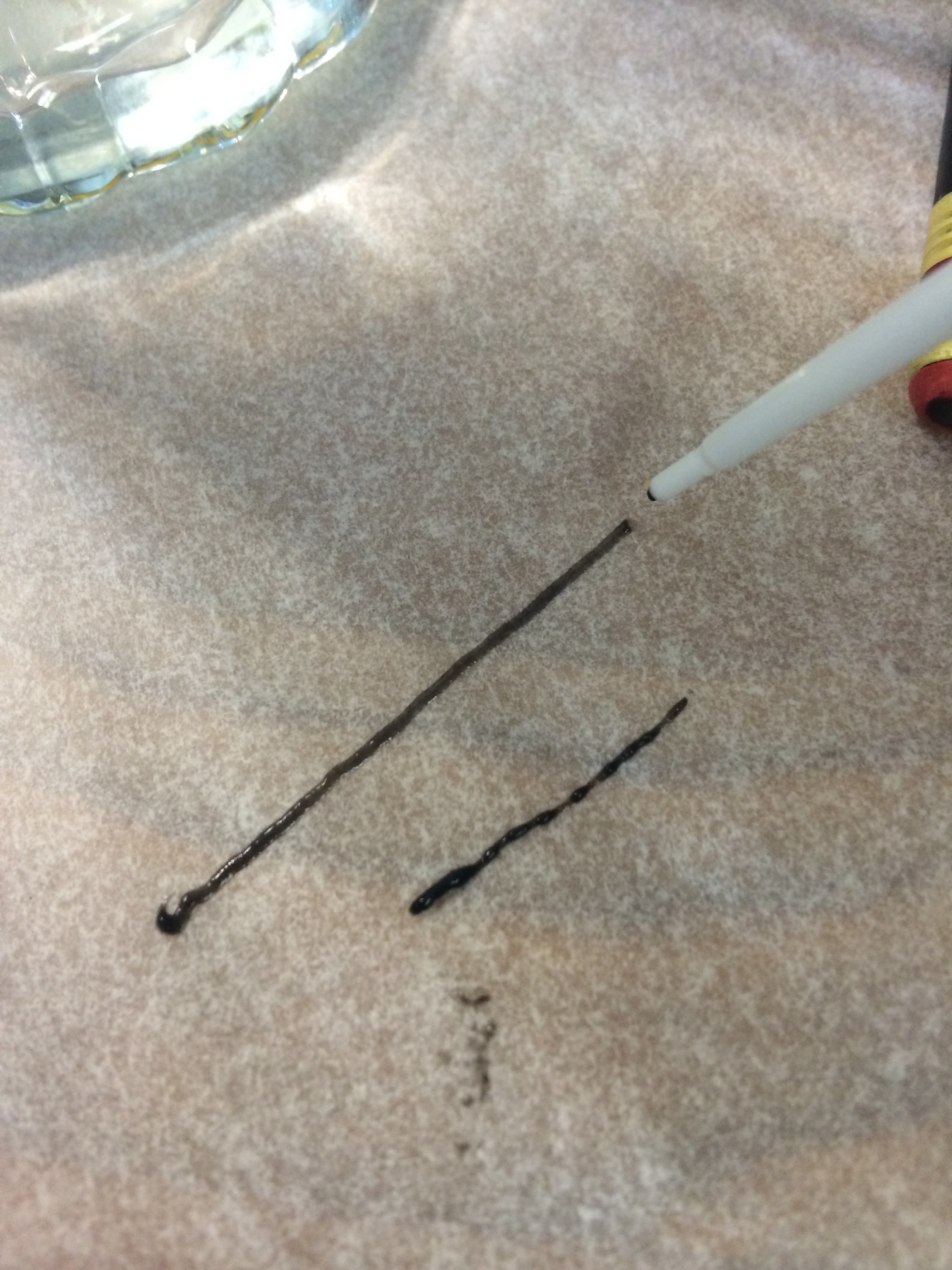
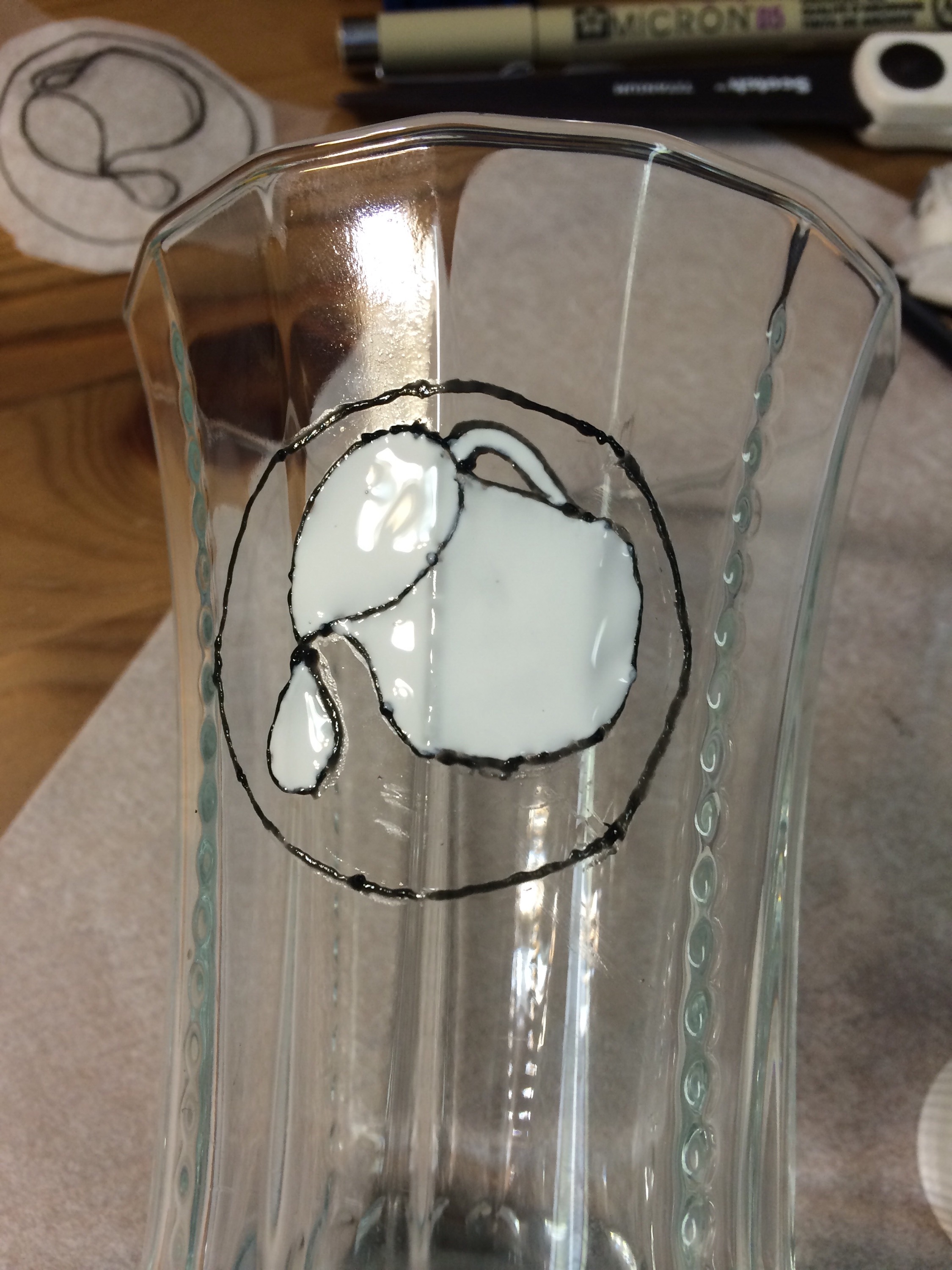
Now it’s easy to trace your design! The thicker Vitrea paint for outlining comes in 20 mL tubes. Blick did not have white, so I settled for black. 

  
I found it was a pain to work with, and I practiced on my tracing paper to get a steady flow. 

  
Even with practice and wiping off then completely redoing the design (before baking you can remove the paints with a damp paper towel), the finished product was not as neat as I would have liked, but I decided it was passable for a first attempt. 

  
After removing the paper from inside the glass, you can start painting. For a translucent effect, you can dilute these paints with a thinner of the same brand. Since the original period reference looked fairly opaque, I skipped this step. Mix your paint well before starting and do one color at a time. (Again, this really lends itself to heraldry.) Use fairly small brushes and don’t mix media with your brushes. I just bought a cheap craft set of small rounds. 

  
I found it helpful to use more rather than less paint to get it to go on smoothly, and to work quickly so the entire area that I was working on stayed wet. 

  
Once the white was finished I washed my brush and did the blue. 


  I then used the blue and white paints to make some very simple decorations around the rest of the glass. Obviously the original is much more intricate, so maybe that’s what I can aim for in the next version. 

  
Let dry for at least 24 hours, then bake in a 325F oven for 40 minutes. 

The finished cup:

  
Happy crafting!

What I cooked at the Cooks’ Play Date

Because of everything else going on (about which I promise a large post is coming in the next several days, after I recover a little), I didn’t really plan sufficiently for this year’s Play Date at An Tir / West War, and I didn’t get to cook much at all on one of the days. Unlike what I usually do, and to my personal shame, I did not bring actual period recipes to cook from. I was winging it on EVERYTHING that I made. All that said, here’s what I put together.

Wednesday: Set up day, so no cooking. We ate dinner in town and I had an outstanding piece of grilled salmon. I did manage to start a butter culture going by adding a half pint of cultured buttermilk to two pints of heavy cream in a jug to sit out overnight. This part is important.

Thursday: I churned butter all day! We were slow to get fire going, but I still managed to make some simple oat pancakes (oat flour, the buttermilk from my butter adventures, and eggs) to put the butter on as “play food.” For dinner I made rolled stuffed beef — I pounded a steak flat and spread it with a mix of ground almonds, powder fine (mixed spices), salt, sugar, vinegar, and rose water, then tied it up and roasted it on the fire. This was good and I’ll likely do it again. I also made Roman cucumber salad, based on my memory of an Apicius recipe (but tweaked slightly because Anne refuses to eat garum) — cucumbers, olive oil, red wine vinegar, mint, and salt. So good! I also put out some butter on the dinner table. I will certainly make butter at War again, it’s so fun. And Anne said out loud “You need a bigger butter churn!” and I have witnesses, so I’m getting a bigger butter churn.

Fish Friday: Went to the fishmonger and stocked up. I don’t think I managed to do any “play food” this day. I tried to make pea soup with some smoked salmon collars and fins that I bought, but I was distracted (this was the day of my vigil) and didn’t really give it enough consistent heat. So in spite of soaking them for over 24 hours, the whole peas just never cooked. That was frustrating. But I did make two things for dinner which were both quite successful. The first was just crab meat (I got a whole crab and Tova helped me extract all its meat) in (freshly churned) clarified butter with sage. I also made a dessert that I plan to make regularly: a Dish of Snow with fresh berries. Dish of Snow is an Elizabethan recipe for whipped cream with the addition of egg white, sugar, and rose water. The egg white seems to really help the cream whip easily; I used my new adorable birch twig whisk and it was not odious to whip by hand. The original does not have fruit added to it, but I went rogue. A+ would eat again.

Saturday was my elevation and I cooked nothing, just sat around feeling a little tense and peevish. I did throw together a very lazy salad for dinner because I did not want to arrive empty handed.

Then Sunday we had to come home! But I did get Crazy Norwegian fish and chips (with grilled fish) on the way home. Yum!

Simple DIY faux parchment lanterns 

Medieval lanterns seem to have fallen into three broad categories: 

  • All metal with holes cut to let out light
  • Wood and parchment
  • Ceramic

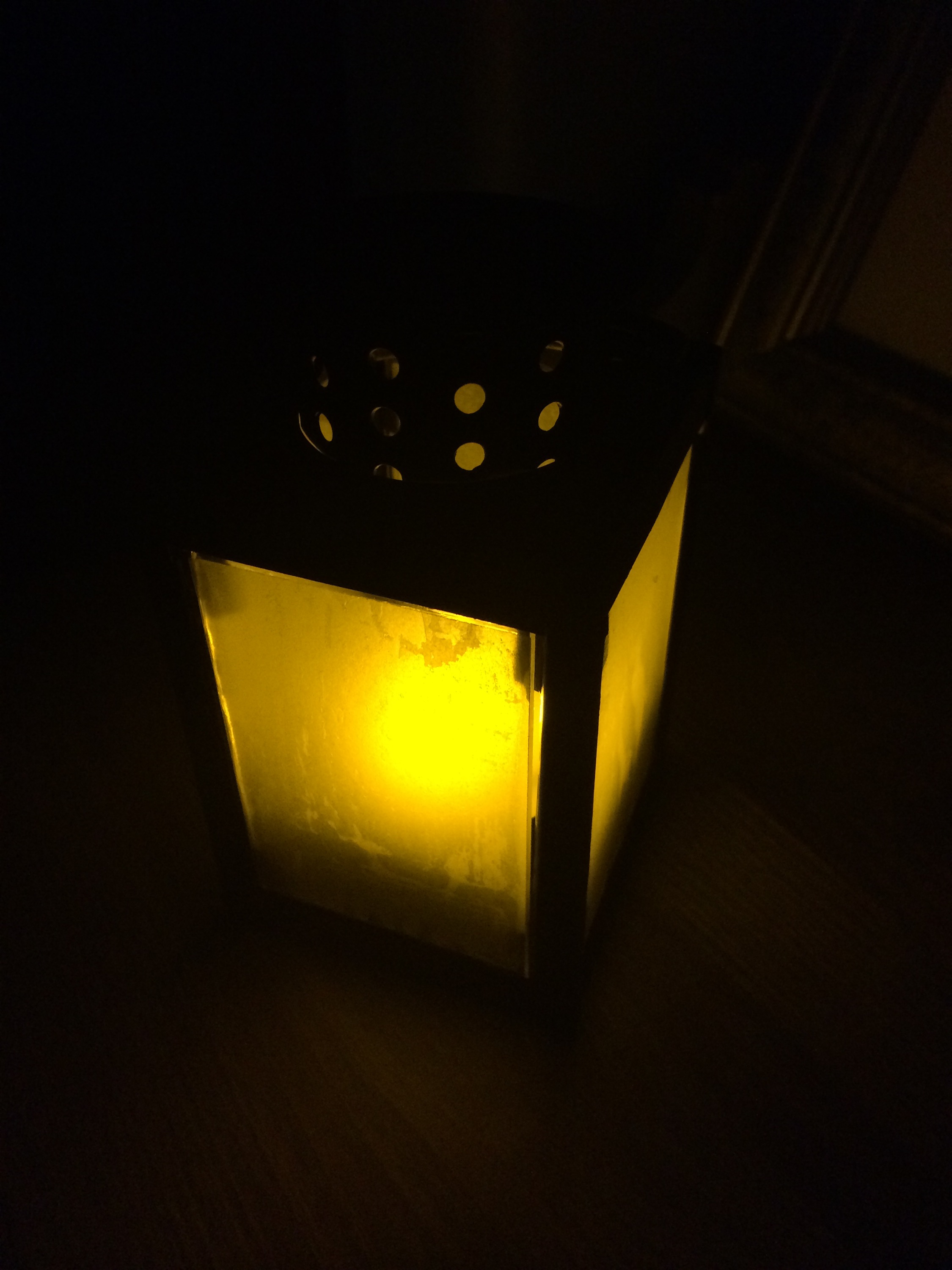
Someday, I plan to make myself some of the second type. But on a tight time and money budget, I hit upon a way to make something using screamingly modern craft supplies that, at least at a glance, gives a similar impression to a lantern with parchment in lieu of glass.   


These are very simple to put together and I don’t think the project ran me more thana few dollars per lamp. You don’t need any special skills or tools. While I think a true historical lantern is a much more worthy project, I suspect this simple DIY version is more in reach for many people; if you were going to bring a battery light, try this instead. 

Gather materials: 


The lanterns themselves and the scrapbooking vellum came from Craft Warehouse; I’m pretty certain they actually carry everything else shown here, but I was working out of my stash. 

Picture tutorial:


Measure  

 
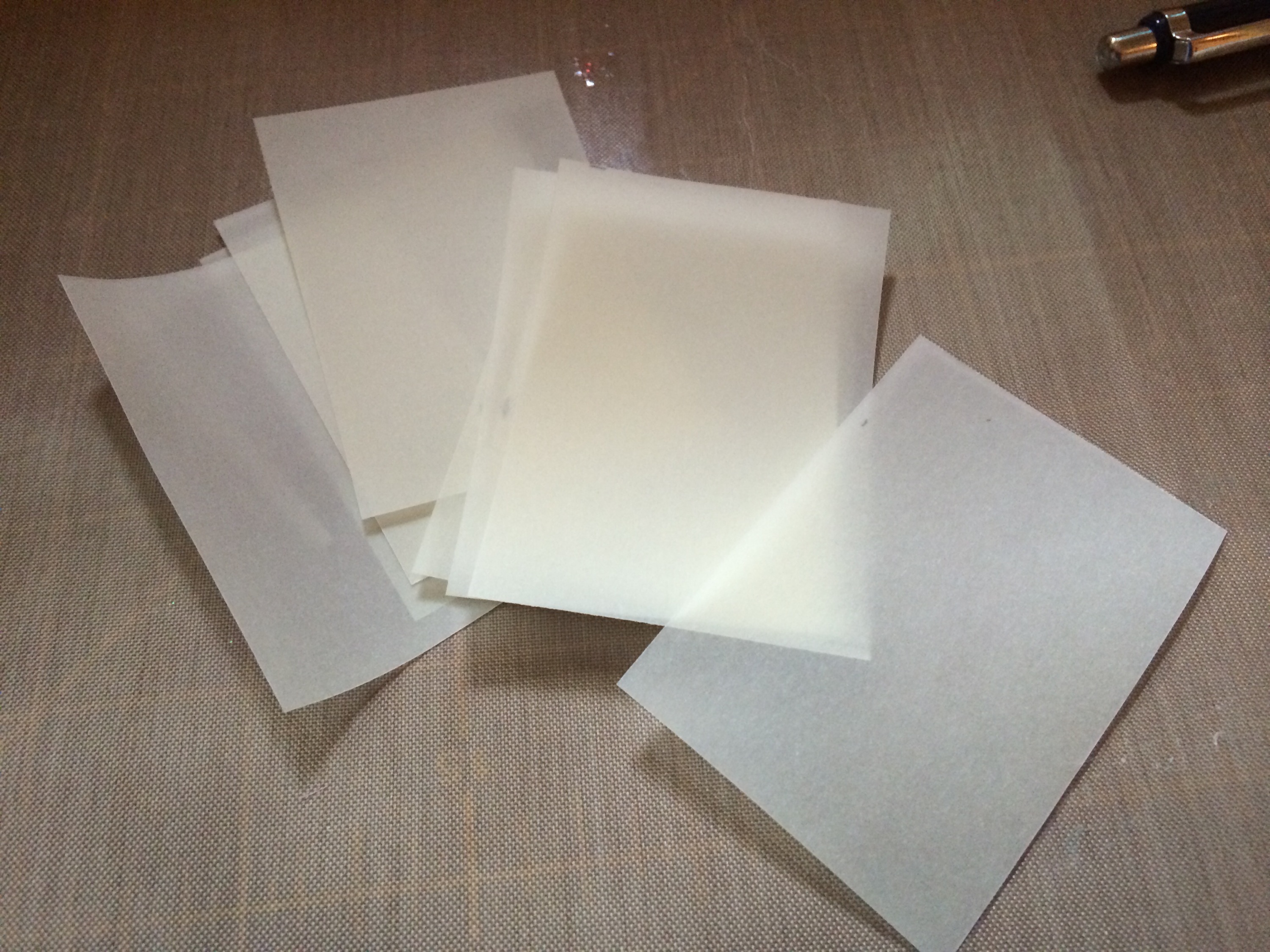
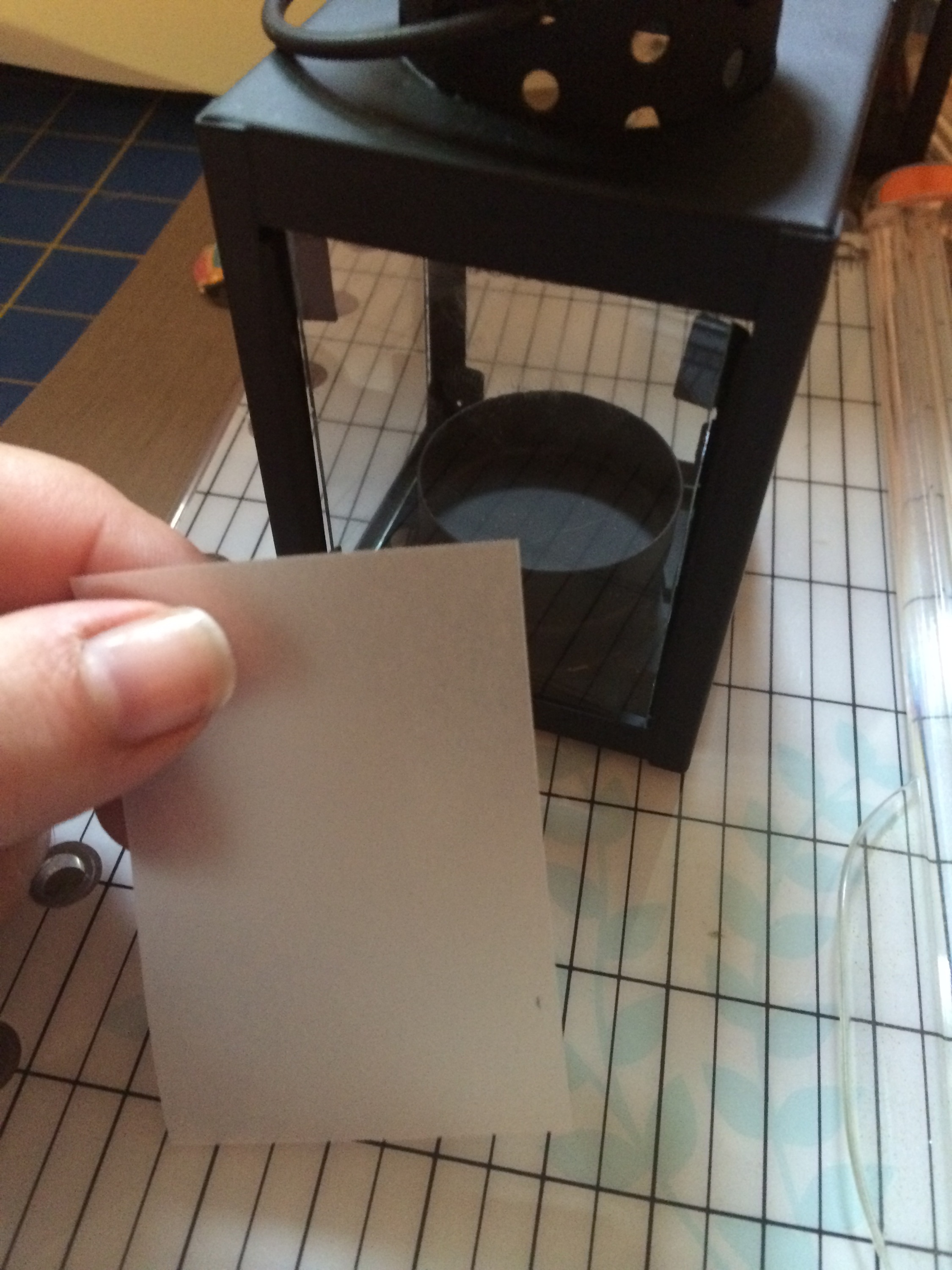
Cut out 4 pieces of vellum for each lantern (you can easily get enough for two lanterns out of one piece of vellum). 


Check fit


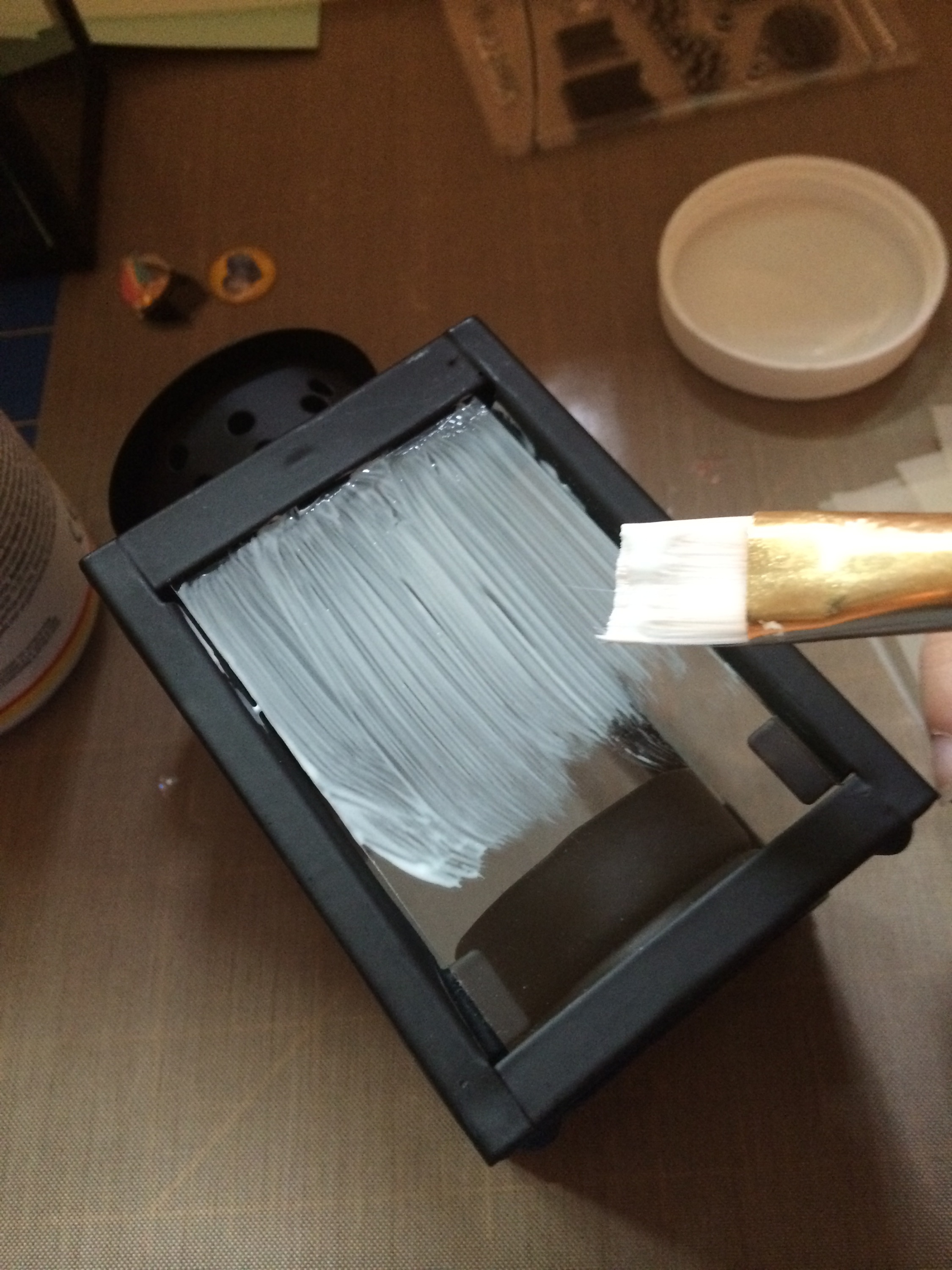
Paint glue on glass. I tested several different adhesives and ModPodge was easiest to work with and lest the fewest wrinkles. 


Carefully place your vellum piece and smooth it out. 

Repeat for each glass side.  

 
Done! Let it dry and add a tealight and you’re good to go. 

How to transport pottery safely

Transporting pottery and glassware to and from SCA events is a somewhat perilous enterprise. A few years ago at a Cook’s Playdate*, Mistress Tangwystl showed off her brilliant solution: polar fleece baggies in various sizes into which pottery can be safely tucked for a long journey. 

  
I call them Pot Socks, The Fun Socks For Fun Pots! Try calling them that, the whole name — it’s super fun. 

I can’t take credit for this great idea, but I can give you a primer on how to make them. It’s dead easy. 

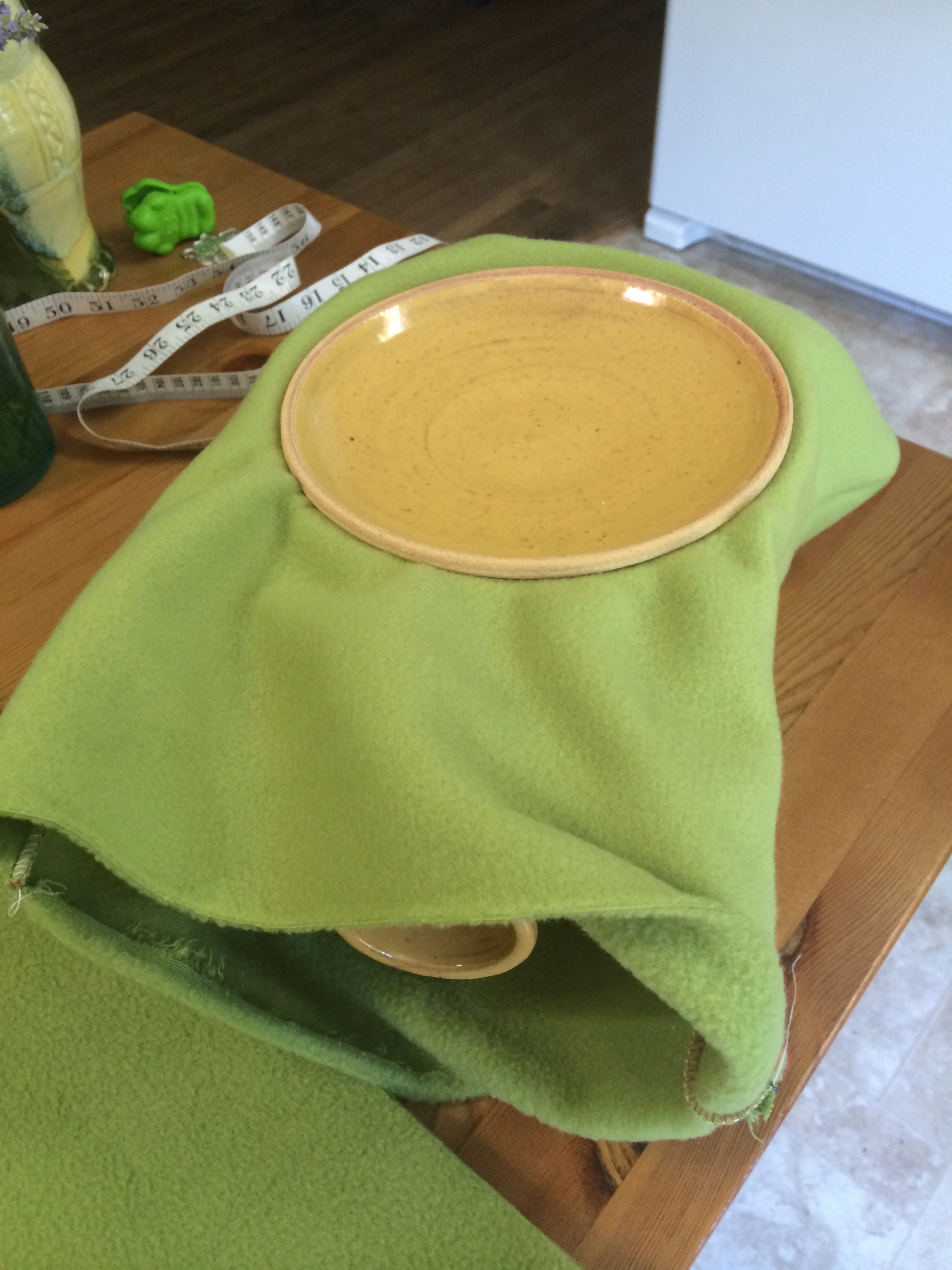
First you get some fleece (I made roughly 10 socks of a few sizes from 1.5 yards of fleece), then you decide what size(s) you want, then you cut them out and sew up the edges (use a serger or a zig-zag stitch). 

  
I found that 12″ was a pretty good width for most of my pipkins. For cups, 6-8″ by about the same length (doubled over) works well. I just used half thr width of the fabric for each sock, so each bag was maybe 15″ deep. 

Here’s a small sock for a glass:


I also made a giant pot sock (not pictured) for a large jug I have, and I’ve previously made a bunch in other sizes for my various drinking vessels. 

Experiment with sizes and make some pot socks (the fun socks for fun pots!) You can make them for plates and bowls, too. They’d make spectacular Twelfth Night gifts. Happy crafting!

*At An Tir / West War, cooks from booth kingdoms, plus now CAID, meet and camp and cook together. It’s the best thing that has ever existed. 

I’m joining the 0.1%

A week from Saturday, I’ll say a revised version of the Oath of the Freemen of York and henceforth be Mistress Eulalia, Piebakere. 

I’ve written quite a bit on women in York craft guilds, and it occurred to me that I could calculate just how long the odds were for Eulalia to become Mistress. I know what percentage of guild members were women, but what percentage of women became guild members?

Unfortunately, hard demographic data don’t appear to be available for Edward I’s reign. But accepting that this is all a hand-waving estimate, I did find enough to do a napkin calculation. 

I found some census data on Wikipedia (their citation is Hoskens 1984) from which I got a rough population estimate of about 6,700. Medieval cities seem to have had more women than men. Schaus gives an estimate of a sex ratio of 90-95 (~110 women to 100 men) in medieval towns. This would give us about 3,500 women living in York at the same time as Eulalia. 
There are 4 female names recorded in the Register of Freemen at this time. So, just over 0.1% of York’s women were guild members. 

That’s a really tiny bullseye to hit. 

How to make a proper medieval pie crust

Update March 2018: I have done more work on this recipe and settled on proportions I like even better. This one still works just fine, but if you’d like the new version you can find it, and lots of other recipes, in my cookbook: Tried and True Historical Recipes for Home, Camp, and Feast Hall.

After several years of experimentation, I have developed a method for making hot water pastry that works very well both for rolled crusts and for self-supporting crusts for a wide variety of medieval pies and tarts.

Finishing a medieval pie crustI use imported flour from Lammas Fayre for my pastry and have been extraordinarily happy with it. I recommend their Elizabethan Manchet Blend for this recipe as that most closely matches the evidence I found for what type of flour was used by high medieval English bakers. If you are unable to obtain this flour, you can substitute a mixture of 2 parts whole wheat pastry flour and 1 part unbleached all purpose white flour, although this does not have the same qualities as the heirloom wheat varieties or sieving to yield “white” flour.

This recipe uses lard for fat, so it is only suitable for meat day pies. That said, lard crusts needn’t be exclusive to meat-filled pies — I’ve never had a problem with the taste of lard pastry for sweet pies. For the record, I use leaf lard from heirloom Tamworth hogs, but you can substitute any home-rendered or pure rendered lard. Do NOT substitute shelf stable lard from the grocery store, it is substantially different from natural, real lard.

If you are cooking for a meat day but cannot use lard due to dietary restrictions, rendered beef suet is a fine substitute but has a somewhat stronger flavor. For fish or fast day pies, the evidence I have found suggests that their pastry was made with thick almond milk, but I am not currently satisfied with the pie crusts I have made using this method and plan to do more experimentation before “officially” publishing a recipe.

The historical pie dish I have is much smaller than a modern pie dish. The amount of pastry that I need to line and top that dish is also a good amount to make for a self-supporting pie that isn’t too large. With some experimentation, I found that doubling the quantities I used made enough pastry for a two-crust pie made in a standard modern pie dish. Since I suspect this is more useful to more people, those are the quantities I give here.

Recipe for Hot Water Pastry: (sufficient for one two crust pie in a standard dish)

  • 14 oz flour
  • 2 oz lard
  • 1 cup (8 oz) water — I know it seems excessive, but much of it will boil off
  1. Place the flour in a heat-safe bowl, making a well in it.
  2. Heat the water and lard together until the lard is fully melted and the water has barely begun to bubble.
  3. Pour the heated water and lard into the well in the flour and stir vigorously.
  4. Knead the dough until smooth and elastic.
  5. Separate the dough into two pieces, one roughly twice the size of the other. Roll out both portions of pastry on a lightly floured surface to between ⅛ and ¼ inch thick.
  6. Use the larger piece of pastry as a bottom crust, lining the pie dish (trap); set aside the smaller piece for a top crust.

Note: This recipe works better when the dough is kept warm.

Happy baking!

Buying Guide: Where I Get Pottery for Cooking

Cooks love pottery! I have an ever-growing collection of replica medieval pottery that I can use for open-fire cooking. Here are some of the potters whom I personally recommend. (Note that these are all located on the West coast of the US, just because of my own geography. If you have potters in other regions whom you recommend, please post a link in the comments.)

Two medieval German “grapen” / pipkins

Dragonfire Pottery (Mistress Gwen the Potter)

One of my first pipkins came from Mistress Gwen. I have put that poor thing through hell, and yet it is STILL going strong. I believe she tends to do more stoneware than earthenware. She does a fairly broad array of functional pottery, including different styles and sizes of medieval cooking pots. I know she sells her work at events, but she does not appear to currently have a schedule or an online store.

Mistress Morgaina

I probably have more pottery from Morgaina than anyone else. I have cooked in many of her pots and have loved them all. A few I have loved to death, but that just gave me an excuse to buy a new pot. She does both earthenware and stoneware, and has a particularly beautiful line of earthenware made with mica inclusions (they sparkle!) She makes a range of items of interest to the historical cook, with a particular focus on Viking and medieval replicas. She sells both at events and online.

Mercy / Raku Rake Tei: Shop and Blog

Located in CAID, Mercy makes forays up to An Tir / West War on occasion as well as selling online. Mercy made the historical pie plate that I use for most of my serious research pies. (Now that’s a thing I should start — there should be a Eulalia seal of approval for replica historical pie plates!) She does a range of items and styles, including some Roman / classical pieces.

Reannag Teine 

One of my most prized pipkins came from this team of talented potters — a long-handled pot based on a 13th century find from (where else?) York, England. A persona-appropriate pipkin! Eeeeeeeeee! It would appear from their website that they are not currently selling cooking pottery, but perhaps they will be again someday.

Mistress Sine / Whitehart Designs

I have only just bought my first pipkin from her (actually, I think it might have been made by her husband, whose name I can’t find at the moment) but I have high hopes for it.

I am always looking for more historical cooking pottery.

Feel free to post additional recommendations in the comments. As much as possible, try to keep the focus on potters who make functional historical cookware (rather than tableware, even if historical) because that tends to be harder to find.

All about medieval English grains

This is an excerpt from my research into high medieval English pastry. For more information and a full bibliography, see “Raising a Coffin” and “Crustardes of Flessh” on the Files page.

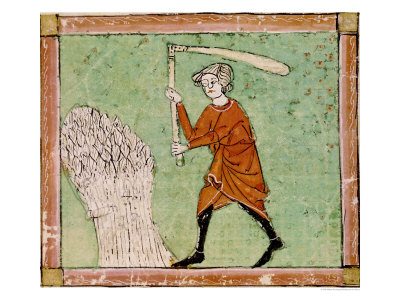
A wheat thresher
A wheat thresher

One potential source of information on medieval cereal crops is blackened roof thatch from standing medieval buildings. Layers of soot-blackened thatch survive on some medieval English buildings dating from the medieval period (specifically the 14th and 15th centuries) and John Letts (see sources) has examined over 200 samples, all originating from the South of England and most coming from Devon. (Typically roofs in the north of England were thatched with water reed or sedge [Ambrose and Letch].)  These samples have preserved not only grain-bearing plants (with both the ears and straw intact), but also crop weeds and other vegetables. These roof samples provide us with a glimpse into complete medieval fields, and allow us to see how crops changed over time. The most significant finding is the diversity of crops within a medieval field:

Most samples contain ‘land race’ mixtures of bread wheat (Triticum aestivum), English rivet wheat (Triticum turgidum) and rye (Secale cereale) which grew to 6ft (1.8m) or more in height – far taller than modern varieties – as well as barley (Hordeam vulgare) and oats (Avena spp). Land races evolve over many centuries when crops are grown in heterogeneous conditions, year after year, from seed saved from the previous year’s crop. The result is that every plant in a land race is slightly different from its neighbour, and medieval cereals were consequently very uneven in straw height, ripening time, grain yield and other agronomic traits. This diversity ensured that a portion of the crop almost always set seed irrespective of the many environmental stresses that can destroy a crop such as drought, waterlogging, frost or crop disease. (Letts)

Continue reading “All about medieval English grains”

How to Make Crustardes of Flessh (finally!)

At long last, here is a complete description of how I made Crustardes of Flessh for KASC back in March, including recipes and quantities. Enjoy!

This is the finished pie that I served my judges on Saturday. The one I had for Sunday looked even better, but I didn't get pictures of it.
This is the finished pie that I served my judges on Saturday. The one I had for Sunday looked even better, but I didn’t get pictures of it.

Continue reading “How to Make Crustardes of Flessh (finally!)”